Minneapolis People's Pride 2026: Powderhorn Park Guide

Minneapolis People's Pride 2026 takes over Powderhorn Park on Saturday June 27 — a non-corporate, police-free, mutual-aid Pride built on community joy.

MinneapolisGay Events
Drag brunches, circuit nights & every party worth knowing in Minneapolis — in your inbox every week.
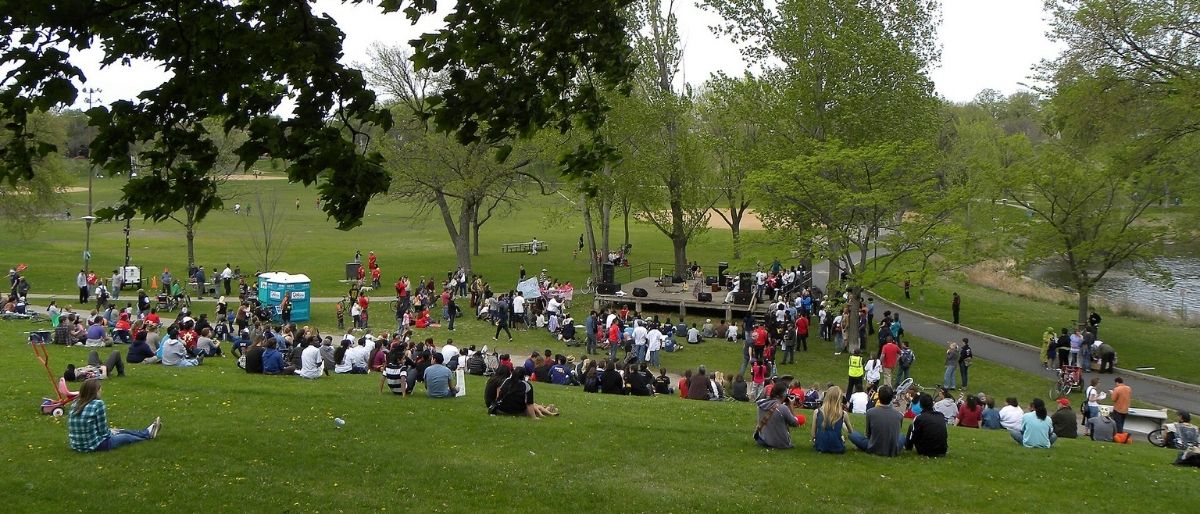
While 475,000 people pour into Loring Park for Twin Cities Pride, a quieter and more pointed celebration unfolds two miles south at Powderhorn Park. Minneapolis People's Pride is the city's grassroots, non-corporate, police-free Pride — four hours of free food, a queer artist market, drag story hour, and live performance built on a single principle: that queer joy itself is a form of resistance. This is your full guide to People's Pride 2026.
- When: Saturday, June 27, 2026 · 12 PM – 4 PM
- Where: Powderhorn Park, 3400 15th Ave S, Minneapolis
- Cost: Free admission, free food, free water
- Vibe: Grassroots, sober, mask-required, family-friendly, all queer
- No corporations. No police. No alcohol on-site.
- Funds raised: All donations go directly to local queer artists and mutual aid groups
- Official site: mplspeoplespride.com
Pro Tip
People's Pride happens the same Saturday as Twin Cities Pride at Loring Park. Many locals do both — Powderhorn for a slow community afternoon, then the festival or a bar on Hennepin for the evening. The two events are roughly 15 minutes apart by car.
What is Minneapolis People's Pride?
Minneapolis People's Pride is a non-corporate alternative Pride founded in 2021 by Ani Cassellius and Lake Owens. It exists because Pride started as a riot at Stonewall — and because the founders, like a lot of queer Minneapolitans, felt that a 475,000-person festival ringed in bank logos and policed by the same MPD that the city protested in 2020 had drifted from that origin.
The vision is direct: "Corporate greed has no place in the queer community." Members of the police "and those who unjustly enforce power, white supremacy, and heteropatriarchy are not welcome." There is no admission, no sponsor tents, no beer garden. There is food, art, performance, and a stated commitment to centering BIPOC, trans, disabled, and undocumented queer folks first.
It's not a protest of Twin Cities Pride. It's a parallel tradition — and one that fits neatly into a long Minneapolis history of the community making its own Pride when the main one didn't make room.
A Brief History of Alt-Pride in Minneapolis
The split between mainstream and grassroots Pride in Minneapolis is older than most cities' Pride events. In 1982, the city held two separate Prides on the same weekend: Gay Pride drew about 1,000 people to Loring Park, while Lesbian Pride pulled around 400 people to Powderhorn — the same park People's Pride uses today. South Minneapolis was the lesbian community hub, complete with womyn's-only coffeehouses and bookstores. The split eventually closed under the weight of the AIDS crisis, but the geographic memory stayed.
Then in 2016, after Officer Jeronimo Yanez was acquitted in the killing of Philando Castile, Taking Back Pride began protesting MPD's presence in the Loring Park festival. People's Pride launched in 2021 as the next chapter — a sustained, annual, infrastructure-having alternative rather than a one-off protest. It's grown every year since.
What's on in Minneapolis
Live from our events calendar — updated daily.


The 2026 Event
People's Pride 2026 runs Saturday, June 27, from 12 PM to 4 PM at Powderhorn Park. The footprint is the park's east side — the rec center, the bowl that slopes down to the lake, the picnic table area, and the parking lot just off 15th Avenue South. Stages, vendor tents, the kids' programming area, and the Chill Zone all live within roughly a five-minute walk of each other.
There are two stages with live music and speakers running through the afternoon, a 50-vendor mutual aid market wrapping the slope, a 20-tabler workshop and skill-share row, free food and water at multiple distribution points, an Ultimate Frisbee pick-up game, and Drag Story Hour for kids. Large fabric puppets often wander the grounds — Powderhorn has a deep puppet-arts tradition (the May Day Parade was born here).
It's one of the few summer events in Minneapolis where you can show up alone, sit on a blanket, eat for free, and end up in a 90-minute conversation with someone you'd never have met otherwise.
Pro Tip
The flattest, most accessible entry to the event is via the parking lot off 15th Avenue South near the Recreation Center. All event paths are at least 36 inches wide, mostly flat, and any ground-level damage is marked with bright paint.
Powderhorn Park: The Setting
Powderhorn Park is a 65-acre south Minneapolis park anchored by a horn-shaped lake, with hills steep enough to sled in February and a recreation center on the west side. The neighborhood around it (also called Powderhorn) is one of the most racially, economically, and politically diverse parts of the city — historically working-class, with deep roots in the Mexican, Somali, Hmong, and Black communities, alongside a long-standing artist and queer-family population.
The park hosts the Powderhorn Art Fair every August (130+ artists across the lake's perimeter), the May Day Parade in spring, and the In the Heart of the Beast puppet shows that have shaped the May Day tradition for half a century. People's Pride sits inside that lineage — it's a community-organized event in a community-organized park.
If you're not from Minneapolis, the easiest landmark is the lake. Almost all of the festival programming happens on the east-facing slope above it.
What to Expect
The Mutual Aid Vendor Market
The vendor market is the structural heart of People's Pride. There's a hard cap of 50 vendors and a stated rule that at least 10% of every vendor's profits go to mutual aid. Priority is given to queer artists; non-BIPOC vendors are capped at 20 of the 50 slots; no more than five vendors of any one craft type are accepted. Fees are sliding-scale ($20–$50) and can be waived for vendors who commit to donating 100% of fundraising.
What that produces in practice is a market that looks nothing like a corporate Pride expo: zines, hand-screened patches, queer trans-feminist tarot decks, ceramics, bondage gear made by the person selling it, books, art prints, mutual aid info tables, and a noticeable absence of bank-branded swag.
There's a separate row of 20 tablers — workshops, skill-shares, and educational sessions where everything is distributed free (no sales). Past tablers have included community de-escalation training, harm reduction kits, voter registration, and HIV testing.
The Performers
Bookings are coordinated by No Borders and explicitly center queer BIPOC musicians and performers across multiple time slots. Past lineups have leaned local — Twin Cities drag, hip-hop, indie, and spoken word — rather than touring acts. The mainstage is loud; the second stage is closer to acoustic.
The Food
All food at People's Pride is free. Volunteers grill on the south side of the event footprint (smoke drifts that direction, useful to know if you're sensitive to it), and additional food and water tables run throughout the afternoon. There are no food vendors — food is distributed, not sold.
Drag Story Hour & Family Programming
Drag Story Hour runs at the family stage during the early afternoon and is genuinely kid-aimed (not adult drag scheduled at noon). There's also a Youth & Family area, an Ultimate Frisbee game that historically anyone can drop into, and the Chill Zone for sensory regulation.
Pro Tip
If you're bringing kids, the family area on the east side of the rec center is the easiest landing spot. Drag Story Hour is the headline kid programming; bring a blanket and a snack and plan for a 30-minute attention span.
How People's Pride Differs from Twin Cities Pride
If you're choosing between the two — or, more likely, doing both — here's the honest comparison:
- Scale. Twin Cities Pride is 475,000 people across a weekend. People's Pride is closer to a few thousand on a single Saturday afternoon.
- Sponsors. Twin Cities Pride is sponsored by major corporate brands. People's Pride accepts no corporate money on principle.
- Police. MPD is present at Twin Cities Pride. People's Pride is explicitly police-free and uses community-based de-escalation and on-site medics.
- Alcohol. Twin Cities Pride has a beer garden. People's Pride is sober — no alcohol served on-site.
- Cost. Both are free to attend, but Twin Cities Pride sells beverages, merch, and food; People's Pride gives food away.
- Masking. People's Pride is mask-required (provided at the welcome table) for community safety; Twin Cities Pride is not.
- Where the money goes. Twin Cities Pride funds Twin Cities Pride. People's Pride donations are routed entirely to local queer artists and mutual aid.
- Vibe. Twin Cities Pride is festival; People's Pride is potluck. Both are valid, and they're not in competition.
It's reasonable to value both — and most attendees do.
Doing Both: The Same-Weekend Playbook
Twin Cities Pride 2026 runs June 26–28 at Loring Park, with the parade Sunday morning. People's Pride is Saturday afternoon at Powderhorn. The clean way to do both:
- Friday June 26: Pride Beer Dabbler at the Sculpture Garden and Youth Night at Loring Park.
- Saturday June 27 morning: Twin Cities Pride Festival opens at 10 AM at Loring Park. Wander vendors, catch the main stage.
- Saturday June 27 noon–4 PM: Drive or bike 15 minutes to Powderhorn. People's Pride for the afternoon.
- Saturday evening: Hennepin Avenue bars (Saloon, Gay 90's, LUSH) for nightlife.
- Sunday June 28 morning: Ashley Rukes GLBT Pride Parade at 11 AM down Hennepin, then back to Loring Park.
If you only have Saturday, the order most locals recommend is Loring Park in the morning, Powderhorn in the afternoon — the contrast is part of the experience. See our full Twin Cities Pride 2026 guide for the festival side and the LGBTQ+ Guide to Twin Cities for the broader weekend.
Accessibility & Community Norms
People's Pride takes its access and safety norms seriously, and they're worth reading before you arrive. The full policy lives at mplspeoplespride.com/accessibility; the highlights:
- Masking is required. Free masks are available at the welcome table. Mask breaks are available in designated zones away from event areas. Exceptions exist only for those whose disabilities prevent mask-wearing.
- Wheelchair access. Two accessible parking spots and 26 undesignated spaces in the lot. All paths are at least 36 inches wide and mostly flat. Damaged ground is marked in bright color.
- Quiet zone. The Chill Zone is the quietest part of the event — shaded, lower-stimulation, with seating.
- No ASL interpretation. As of the 2025 event, no ASL interpreters were on site. Reach out to mplspeoplespride@gmail.com if you need accommodations.
- Sober space. No alcohol is served on site, full stop. The whole event is the sober space.
- Medics on site. Community medical volunteers are present throughout the event.
- No police. Community de-escalation volunteers handle conflict; volunteers are trained the week before the event.
The norms are part of what makes this event what it is. Showing up means showing up to those norms.
Getting There & Where to Park
By light rail and bus: The METRO Blue Line runs from downtown Minneapolis to the Lake Street/Midtown station, which is about a 15-minute walk to Powderhorn Park. Bus routes 5, 14, and 27 plus the METRO B Line and D Line all serve the area; the closest bus stop is Bloomington Ave S & 34th St E, a six-minute walk from the park.
By bike: Powderhorn is well-served by Minneapolis bike infrastructure — the Midtown Greenway (an east–west bike highway) runs three blocks north of the park. Bring a U-lock; on-park bike racks fill early.
By car: The east-side parking lot off 15th Avenue South is the closest. It fills by 11:30 AM on event day. Street parking on 33rd, 34th, and 35th between Park and Bloomington is your overflow. Read posted signs — Minneapolis residential parking enforcement is real.
From Loring Park (Twin Cities Pride): It's a 15-minute drive south, a 25-minute Blue Line ride (transfer at Lake Street), or a 35-minute bike ride down the Greenway and south.
Pro Tip
The cleanest cross-Pride move is biking. The Midtown Greenway connects Loring Park to Powderhorn almost door-to-door, you skip parking entirely, and you'll see roughly half of queer Minneapolis doing the same ride.
Where to Eat Before & Drink After
People's Pride ends at 4 PM, which leaves a long Saturday evening. Here's what locals actually do — south Minneapolis food, then either neighborhood bars or a pivot to NE Mpls / St. Paul depending on your vibe.
Food on the Way (South Minneapolis)
The Nicollet Diner is the 24-hour diner at the south end of downtown — long-running, gay-friendly, the right call when it's 11 PM and you want comfort food.
Sober & Community-First (Fits the Day's Ethos)
Steady Pour is Minneapolis's non-alcoholic bottle shop and bar — the most natural after-People's-Pride spot if you're keeping the sober energy. They run tastings, have a small bar program, and the crowd skews queer.
Black Garnet Books is the Black-owned independent bookstore in St. Paul that anchors a lot of Twin Cities queer literary life. If People's Pride leaves you wanting more conversation and less crowd, this is the move.
Smitten Kitten in south Minneapolis is the queer- and woman-owned, sex-positive shop that's been a Powderhorn-area institution since 2003 — a five-minute drive from the park.
Bars That Match the Vibe
If you're transitioning to nightlife, the bars that share People's Pride's community energy (rather than the Hennepin Avenue dance-floor energy) are over the river or in NE.
Black Hart of Saint Paul is the queer-owned, soccer-loving St. Paul bar that doubles as community space. The Pride weekend programming is genuine, not a corporate add-on.
A Bar of Their Own is the women's sports bar in Northeast that opened in 2024 and immediately became the lesbian/queer-women's anchor. Watch parties, community nights, and a packed Saturday calendar all summer.
19 Bar in Loring Park is Minneapolis's oldest gay bar — opened 1952. It's small, neighborhoody, and the right call if you're closing the loop back near the Loring Park festival grounds.
LUSH Lounge & Theater in NE Arts District runs drag shows nightly through Pride weekend and is the closest thing to a "stay all night" queer bar that fits the alternative ethos better than the Hennepin Ave clubs.
Steady Pour, Minneapolis
Minneapolis, Minnesota
Black Hart of Saint Paul, St. Paul
St. Paul, Minnesota
A Bar of Their Own, Minneapolis
Minneapolis, Minnesota
19 Bar, Minneapolis
Minneapolis, Minnesota
LUSH Lounge & Theater, Minneapolis
Minneapolis, Minnesota
For full Twin Cities bar coverage, see Best Gay Bars & Clubs in the Twin Cities.
Find Pride Weekend Events in Minneapolis
Live event listings for People's Pride weekend, drag shows, parties, and after-hours sets — all in one place on Out x Out.
How to Support People's Pride
Because People's Pride takes no corporate money, the event runs on three things: vendor fees, individual donations, and volunteer hours. There are clean ways to plug in for 2026:
- Vendor application. Opens April 1, closes May 15, decisions June 1. Sliding-scale fees ($20–$50), waivable for 100% donation commitments. Apply via the 2026 Vendor Application.
- Tabler application. Same April–May timeline. For workshops, skill-shares, and free distribution only. 20 slots.
- Performer application. Coordinated by No Borders — email gabe@afghanculturalsociety.org or use the 2026 Performance Application Google Form on the Get Involved page.
- Volunteer. Multiple roles, accessibility-first, includes free de-escalation training the week before the event and a free volunteer T-shirt. Sign-up posted in spring.
- Donate. A 2026 donation page is launching in spring. All money is routed to local queer artists and Twin Cities mutual aid groups. Email mplspeoplespride@gmail.com to be notified.
The fastest way to stay current: subscribe to the People's Pride email list at mplspeoplespride.com or follow @mplspeoplespride on Facebook and Instagram.
Other Twin Cities Pride Events Worth Knowing
People's Pride is one of three distinct Pride traditions in the Twin Cities — and pairing them is part of how locals do the season:
- Twin Cities Pride 2026 — June 26–28 at Loring Park. The big festival and parade.
- Saint Paul Pride 2026 — June 13–14 at Dual Citizen Brewing. Smaller, brewery-anchored, community-feel.
- Twin Cities Pride Sports Nights — Pride Nights with the Twins, Lynx, MNUFC, Saints, and Wild across the year.
- MNPOC Pride (Twin Cities Black Pride) — August 12–16 at venues across Minneapolis. Full week centering BIPOC LGBTQIA+ voices. mnpocpride.org
For the broader queer guide to the metro, including history, neighborhoods, and where to eat: LGBTQ+ Guide to Twin Cities 2026.
FAQ
When is Minneapolis People's Pride 2026?
Saturday, June 27, 2026, from 12 PM to 4 PM at Powderhorn Park (3400 15th Ave S, Minneapolis). It's the same Saturday as the Twin Cities Pride Festival at Loring Park.
Is People's Pride free?
Yes. Admission is free, food is free, and water is free. Vendors pay sliding-scale fees and donate at least 10% of profits to mutual aid. Donations from attendees go entirely to local queer artists and mutual aid organizations.
Do I have to wear a mask at People's Pride?
Yes. People's Pride is a mask-required event for community safety. Free masks are available at the welcome table when you arrive, and there are designated mask-break areas away from event activity. Exceptions exist only for those whose disabilities prevent mask-wearing.
Why is Minneapolis People's Pride police-free?
The organizers explicitly do not accept the presence of police at the event because Pride began as resistance to police violence at Stonewall and because of MPD's role in events including the killing of George Floyd in 2020 and the killing of Philando Castile in 2016. Community de-escalation volunteers and on-site medics handle safety instead. The full statement is on the vision page.
Can I drink alcohol at People's Pride?
No. People's Pride is a sober space — no alcohol is served on-site. The decision is part of the event's accessibility commitment (sober queer folks deserve a Pride that includes them) and its anti-corporate stance (no beer sponsorships). If you want a beer garden, that's at Twin Cities Pride at Loring Park.
How is People's Pride different from Twin Cities Pride?
Twin Cities Pride at Loring Park is the large mainstream festival with 475,000+ attendees, corporate sponsors, a beer garden, and police presence. People's Pride is a smaller (a few thousand people), non-corporate, police-free, sober afternoon event at Powderhorn Park focused on a mutual-aid vendor market and queer community programming. Many locals attend both.
Is People's Pride kid-friendly?
Yes. Drag Story Hour, an Ultimate Frisbee pickup game, and a Youth & Family area run during the event. The Chill Zone serves as a quieter, lower-sensory area for kids who need it. There's no alcohol on-site, which makes the whole footprint family-appropriate.
How do I get to Powderhorn Park without a car?
Take the METRO Blue Line to Lake Street/Midtown station and walk 15 minutes south. Bus routes 5, 14, and 27 plus the B Line and D Line all serve the area — the closest stop is Bloomington Ave S & 34th St E. The Midtown Greenway bike highway runs three blocks north of the park; biking is the cleanest way to combine People's Pride with Twin Cities Pride at Loring Park.
How can I become a vendor or performer at People's Pride 2026?
Vendor and tabler applications open April 1 and close May 15, with decisions announced June 1. Performer bookings are coordinated by No Borders (email gabe@afghanculturalsociety.org). All applications are linked from the Get Involved page at mplspeoplespride.com.
Enjoyed this article?
Subscribe to our newsletter for more LGBTQ+ travel guides, local discoveries, and community stories delivered to your inbox.
Subscribe to Newsletter
Robbie S.
I'm Robbie, the founder of Out x Out. I'm from Minneapolis, though I'm spending 2026 building this community from the road — somewhere between South America and Asia. The idea for Out x Out came from a trip to Berlin, where the gay nightlife calendar was years ahead of ours: you could see not just where to go out, but which night to go — so naturally I wanted that kind of insider info for every city in the US (and beyond... eventually). I'm more of a behind-the-scenes type, but the whole point of this is connection: I'd take one real one over a hundred surface-level ones, and I'm trying to build that for the community, city by city.
Related Posts
Gay Events in the Twin Cities This Weekend: Jul 23–26, 2026
The North Star gay rodeo, a Taylor Swift Eras drag brunch, and Cruel Intentions the musical at LUSH — plus the week's queer pop-culture briefing.
Golden Valley Pride 2026: Minnesota's Largest Suburban Pride Turns 10
Minnesota's first and largest suburban Pride festival hits its 10th anniversary on June 13, 2026. Here's everything to plan a day at Brookview Park.
Saint Paul Pride 2026: Complete Guide to STP Pride at Dual Citizen Brewing
Two weeks before Twin Cities Pride, St. Paul throws its own brewery-based celebration. Here's the parade, the lineup, and what to expect at STP Pride 2026.