
Scouting America Cut Its Jamboree's Gay Scout Spaces. James Dale Is Suing the Pentagon.
The National Jamboree dropped its LGBTQ+ and Allied Scouts space as the Pentagon leaned on Scouting America, which calls the change programmatic. The man the Boy Scouts expelled in 1990 sued to make the Pentagon show its work — and the Supreme Court ruling that cost him is now his argument for protecting trans kids.

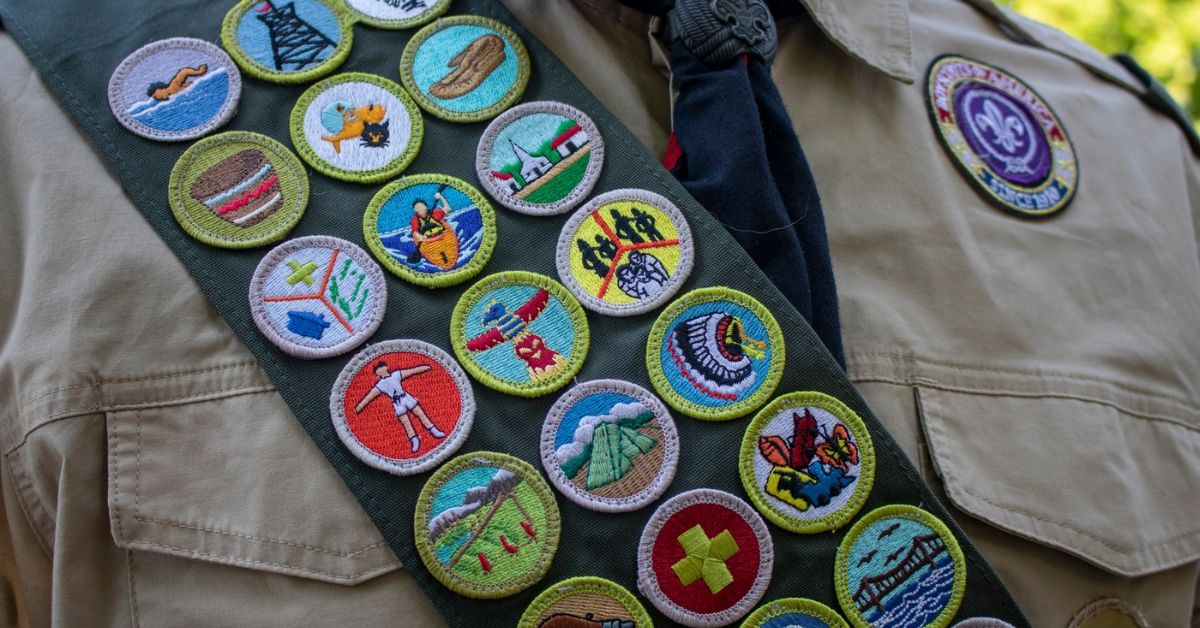
The National Jamboree that ends Friday in the mountains of West Virginia has about 15,000 scouts, leaders and volunteers on site for mountain biking, kayaking, leadership programs and educational sessions. What it does not have this year are the dedicated spaces once set aside for gay scouts, for women, and for scouts of color — the kind of inclusion initiative the organization used to celebrate publicly.
The Associated Press reported Thursday that the organization eliminated those spaces as it faces pressure from the Pentagon to retreat from diversity efforts. Some scouts who had planned to be there didn't go.
One of them is John Andrew Segebarth, a 21-year-old Eagle Scout and college student who joined in first grade and was elected by his peers as a national officer in 2024. He is gay, and he had planned to help run the LGBTQ+ and Allied Scouts space. He told the AP the reversal cuts against what the organization had told him it stood for: “Scouting's kind of walking back on its values that they told me they believed in.”
Samuel J. Aronson, who has run inclusive programming at previous national gatherings and serves as an assistant scoutmaster, also stayed home. “Scouting fundamentally is a safe place for young people to have fun,” he told the AP. “In the absence of these spaces, we're denying all that, both the safety and the fun, to thousands of young people.”
Layla Grace went anyway. Now 21 and an assistant scoutmaster, she first found a place to talk openly about being transgender at a community tent, and had planned to staff the LGBTQ+ space this year. When it was canceled she nearly stayed home, then went anyway so she could be there for the people who needed help — volunteering instead at an area covering mental health, food security and education, and trying to fill the gap the cancellations left. “I am wearing so many rainbows on me; my right hand has my nails painted in the lesbian flag and my left hand has my nails painted in the transgender flag,” she told the AP. “I am being as loud as I can to do my best to hopefully make up for the lack of community spaces.”
A Scouting America spokesperson told the AP the organization stays “fully committed to welcoming and serving all youth,” but did not answer the AP's questions about what changed at the jamboree.
Two accounts of the same deal
In February, Defense Secretary Pete Hegseth announced that Scouting America — the organization that dropped the Boy Scouts of America name to reflect its growing number of girls and its inclusion push — had signed a Memorandum of Understanding with his department. He had publicly threatened to sever the century-old relationship between his department and the group over what he calls “woke” policies.
LGBTQ Nation reported in March that the deal had Scouting America agreeing to end its diversity commitments, register every child under the sex on their birth certificate, and keep restrooms, tents and other spaces separated on the same basis; Dale, in his column, describes those terms specifically as how Hegseth characterized the agreement. “That means that the application, any application, will have only two sex designations, male and female,” Hegseth said, “and the application must match the applicant's birth certificate.” He grounded it in policy — “All of our affiliations must meet this standard,” he said, pointing to an executive order barring what it called radical DEI preferencing in federal contracting — and was blunt about where he'd like it to end up: “Ideally, I believe the Boy Scouts should go back to being the Boy Scouts as originally founded, a group that develops boys into men. Maybe someday.”
Scouting America told it differently. Roger Krone, the organization's president and CEO, told the AP — in remarks LGBTQ Nation reported at the time — that membership itself hadn't changed: “We have transgender people in our program, and we'll have transgender people in our program going forward.” He did concede ground on facilities in the same interview: “We do not put boys and girls together in intimate spaces, and in order to do that, we need to have some knowledge of who they are.” The AP reports that the two parties have described the agreement differently ever since.
For months, the one document that would settle the question stayed out of public view.
Dale's FOIA suit
James Dale was the plaintiff in Boy Scouts of America v. Dale, and he is the reason the agreement itself is on the record at all. In an opinion column published by The Advocate on July 6 — written by Dale himself, in his own cause — he laid out what he did and why: in March he filed a Freedom of Information Act request seeking the signed MOU, the Pentagon let the 20-working-day deadline pass while citing “unusual circumstances” and a backlog of more than three thousand requests, and his appeal was routed back to the same office that hadn't acted. The final letter told him he could sue. On June 25, he did.
As of that early-July account, Dale wrote, the government had named no FOIA exemption that would justify withholding the document and had said only that it wouldn't comment because the matter was in litigation — which, he noted, was a situation the non-release had created in the first place. Every step of that FOIA chronology rests on his telling.
AP reported that Dale did obtain the memo this month after suing — a six-page document laying out the compliance monitoring, under which officials on both sides would have “periodic touchpoints and meet” as needed. Asked about how the deal is being implemented and monitored, a Pentagon spokesperson pointed the AP back to Hegseth's earlier comments.
Dale's read on the arrangement, to the AP: “They basically have their thumb on the organization, threatening them under constant pressure.”
There is a clock on this. Hegseth said in a February video that his department would “vigorously review” the changes and would end the military's longtime support if Scouting America failed to comply by late August. Writing in early July, Dale said the Pentagon was expected to judge on or around August 27 whether the organization has made “substantial progress” toward the agreement's terms. That date is now under a month away. The leverage is concrete: per the AP, the military supplies the jamboree's logistics, and a number of scout units gather at or beside bases.
The ruling that cost him
By his own account, Dale was expelled by the Boy Scouts in 1990 for being gay; the AP puts it in the early 1990s. He sued at 21. The Supreme Court ruled against him 5–4 eight years after that, holding that the organization's First Amendment rights allowed it to shut him out — a decision he describes as devastating, and one he heard about standing in Lambda Legal's office after someone caught it on the radio.
That ruling is the one he is now pointing at Hegseth. The principle it established, as Dale frames it, is that government cannot dictate to a private association whom it must accept when doing so interferes with the group's expressive choices. If that shielded the Scouts when they wanted him gone, he argues, it should shield them now. “How could the government say the Scouts had the right to expel me because I was gay, but then turn around and tell them they could not have transgender kids?” he wrote.
He is candid that this is not the use he imagined for the case that bears his name. He also notes he filed on June 25, three days short of the 26th anniversary of the day the Court told him he'd lost.
Worth keeping in view: this is the same organization that expelled him, under a new name and a rewritten rulebook. It ended its ban on gay scouts in 2013 and on gay leaders in 2015, opened to trans boys in 2017 and to girls in regular troops in 2019, per LGBTQ Nation. Dale also writes that on the same day Hegseth made his February announcement, the group dropped its Citizenship in Society merit badge — an award built around diversity, equity, inclusion and ethical leadership — and that when reports surfaced in April that the jamboree's affinity spaces had been canceled, Scouting America characterized the change as programmatic. He says he doesn't know exactly what the organization agreed to, and suspects the people running it are trying to hold a line, imperfectly.
That is the part worth sitting with, and it's ours to say: the fight here is not really between gay scouts and Scouting America. It's over whether a government department gets to set the terms of a private youth organization's membership by holding its support hostage — and it took a federal lawsuit from one expelled Eagle Scout to pry the terms loose at all.
Dale put it more plainly. “This time, I am not fighting the Scouts,” he wrote. “I am fighting to protect them.”
Stay in the Loop
LGBTQ+ travel tips & community updates
More news
 news
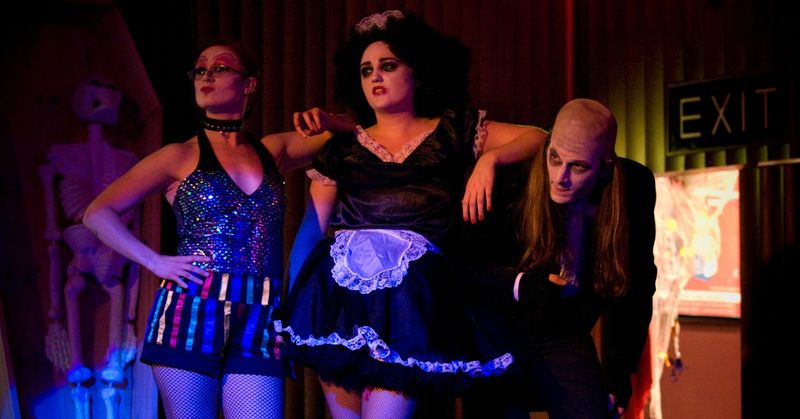
newsA Drag Rocky Horror Doc Played Tribeca and Outfest. It Still Has No U.S. Distributor.
Time Warp follows a drag theater troupe in Rock Springs, Wyoming, staging a Rocky Horror shadow cast. Per IndieWire it is still seeking U.S. distribution — and per the film, it left Tribeca with a jury mention.
 news
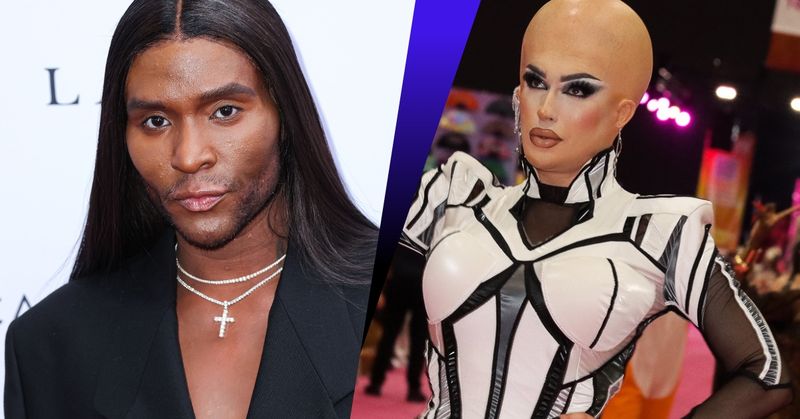
newsPlane Jane Went Out in Project Runway's First Cut. Then She Came for Law Roach's Wigs.
Season 22 opened by cutting six designers, and she was one of them. Weeks later she has notes on the judge who called her look, and a fresh row with Discord Addams.
 news
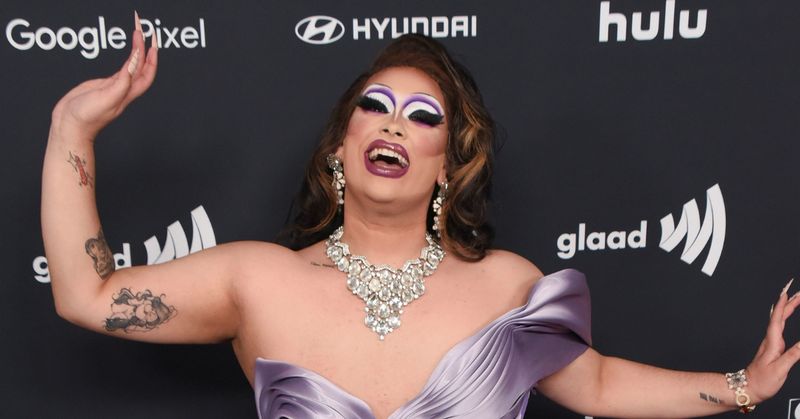
newsBig Brother's First Drag Queen Was Evicted 12-0 — After 'I Miss Gay People' Went Viral
Jason De Puy went out unanimously on Thursday, backdoored by the houseguest already under fire for calling him “zesty bestie.” He was the cast's only out LGBTQ+ houseguest. He also walked out believing America hated him.
 news
newsAlaska Never Had a Dream Role — Until 'Oh, Mary!' Made Her Mary Todd Lincoln
The Drag Race All Stars champion opens the first national tour of Cole Escola's Tony-winning comedy in September. Then J. Harrison Ghee becomes the first performer in the production to play both Mary and Mary's Husband.