A Drag Rocky Horror Doc Played Tribeca and Outfest. It Still Has No U.S. Distributor.
Time Warp follows a drag theater troupe in Rock Springs, Wyoming, staging a Rocky Horror shadow cast. Per IndieWire it is still seeking U.S. distribution — and per the film, it left Tribeca with a jury mention.

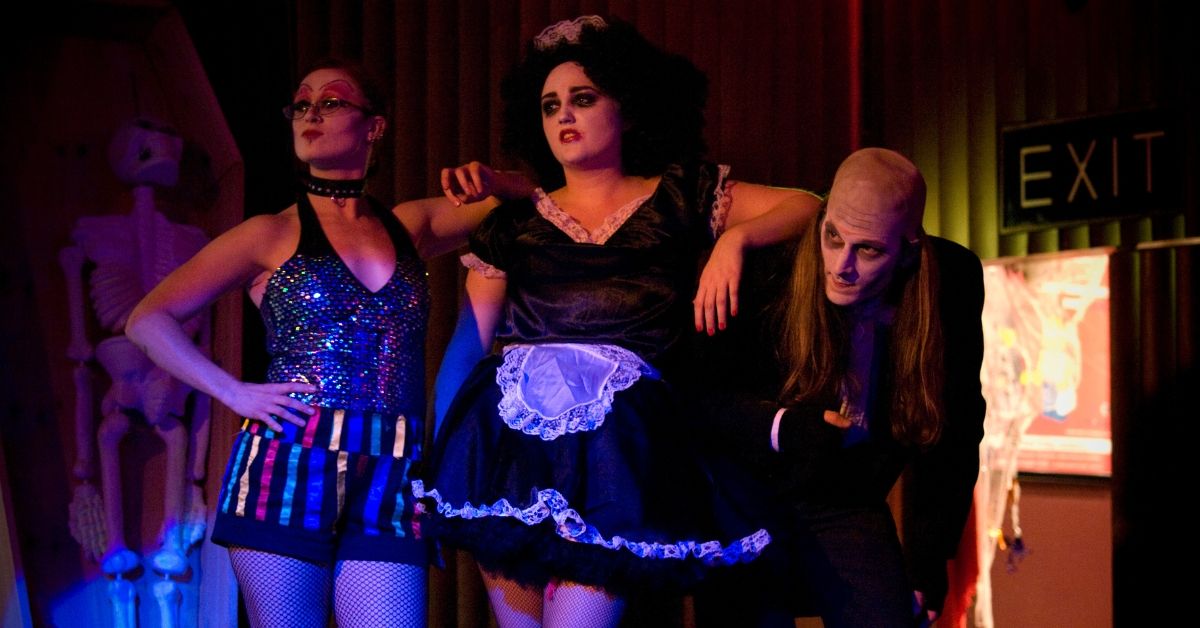
There is a documentary about a drag Rocky Horror staged in a small Wyoming city that has been around the festival circuit since June, and it still has no U.S. release.
Time Warp, directed by Allison Berg, premiered at the 2026 Tribeca Festival and went on to DC/Dox, Frameline at San Francisco’s Castro Theatre and OutfestNEXT in Los Angeles. The film’s own site says it left Tribeca with a Special Jury Mention for Best Documentary Feature, quoting a citation calling it “the film the world needs to see right now” — none of the three reviews in our pack mentions an award, so treat that as the film’s claim. What is not in doubt is the last line of IndieWire’s review, published Thursday: it “is currently seeking U.S. distribution.”
What it’s about
Rock Springs is a high-desert city in southwest Wyoming. The Moveable Fest puts the population around 23,000 and says the town has seen better days. A 25-year-old named Kenny Starling — described by IndieWire and The Moveable Fest as nonbinary, and originally from South Carolina — started a drag and queer theater company there, billed on the film’s site as “the first drag and queer theater company in town.” Its inaugural production, mounted in 2022, was The Rocky Horror Picture Show staged shadow-cast style at the 350-seat Broadway Theater.
Berg films the build. Per The Film Stage, Starling recruited teenagers from the town, a city councilman and whoever else volunteered, and Berg went to cast members’ homes, schools and workplaces rather than staying in the rehearsal room. The Film Stage’s read is that “all of them just want a place to be themselves,” and that for the younger ones the families range from unsure at best to, at worst, misgendering them and pushing them away. IndieWire adds that several of the youngest cast members’ parents did not know they were involved.
The town resisted less than the setup suggests
The frictions are real and specific. IndieWire describes a city council “attempting censorship on the project” and a Trump-supporting veteran staging a “First Amendment” protest outside the theater. The Film Stage describes Berg filming the town hall where residents got up to speak about the production.
But all three reviews land in roughly the same place on how it went. IndieWire says what is most heartening is how the film shows the locals rallying around the production. The Film Stage, describing a preview performance of “Sweet Transvestite” at a local bingo night, reports there were no protestors or counter-programmers and no shouts or insults from the audience, and reads the night as a possible shift in Rock Springs. The Moveable Fest is blunter: “there isn’t that much drama around the production,” the person who took a complaint to the dais is “largely outnumbered,” and “there never appear to be any true threats to the outcome.” Starling describes the people of Rock Springs as “very kind”; the aversion, in that reviewer’s reading, is driven by fear of the unknown.
The Moveable Fest also gives an opponent room. It describes a fervent Trump supporter selling T-shirts by the roadside who softens to the point of recalling a brother who died by his own hand, wishes aloud for more mental health services locally, and ends up “compassionately comparing himself to the queer community in standing for what they believe in.” Whether that is the same man IndieWire has protesting outside the theater, the sources don’t say.
The context the film puts around it
Rock Springs is a few hours’ drive from Laramie, where Matthew Shepard was murdered in 1998 — a proximity IndieWire draws on, along with what it calls Wyoming’s “alarming suicide rate, especially among young people.” Wyoming’s nickname is the Equality State; per the film’s synopsis, Starling’s bet is that a cast in corsets and heels on a Friday night might make that true inside one building.
If you’re struggling, the 988 Suicide & Crisis Lifeline is available 24/7 by call or text. The Trevor Project’s counselors for LGBTQ+ young people are at 1-866-488-7386, or text START to 678-678.
What the reviews say
IndieWire graded it a B, calling it “a vital story told with warmth and wit” while finding the ensemble too sprawling to give anyone their due and the performance footage prone to “draggy asides.” It suspects the running time — which it puts at nearly 100 minutes, against the 112 on the film’s site — comes down to Berg not wanting to part with meaningful footage of subjects she felt each deserved room in the film. The Moveable Fest called it heartening and also wanted it slimmer. The Film Stage called it a necessary celebration of the embrace it documents.
The Moveable Fest is the one that sketches the cast in detail, and it is the best argument against reading this as a town-versus-troupe story: a former homicide detective, “the daughter of a Christian choir teacher” who was “tired of the roles she was offered because she’s Black,” and two openly queer high school sophomores, Bones and Megan, who talk about how hard acceptance has been at home while wandering a downtown of thrift and secondhand record shops largely unbothered.
Berg has been here before — her earlier documentary The Dog profiled John Wojtowicz, who robbed a Brooklyn bank to try to pay for his partner’s gender confirmation surgery and became the basis for Dog Day Afternoon. IndieWire lists Josh Gad, Billy Porter and John Cameron Mitchell among the executive producers.
Where that leaves it
A film can premiere at Tribeca, play Frameline and Outfest, and still be looking for a U.S. home at the end of July. That is one film and not a trend, and we can’t tell you why it hasn’t sold — but it is a real gap between the reception and the outcome, on a documentary about a town working out whether these people get to be visible at all.
For now there is no U.S. release to point you at. Watch the film’s site for a distribution announcement, or catch it if it comes to a festival near you — and we’ll update this if it lands one.
Stay in the Loop
LGBTQ+ travel tips & community updates
More news
 news
newsPlane Jane Went Out in Project Runway's First Cut. Then She Came for Law Roach's Wigs.
Season 22 opened by cutting six designers, and she was one of them. Weeks later she has notes on the judge who called her look, and a fresh row with Discord Addams.
 news
newsBig Brother's First Drag Queen Was Evicted 12-0 — After 'I Miss Gay People' Went Viral
Jason De Puy went out unanimously on Thursday, backdoored by the houseguest already under fire for calling him “zesty bestie.” He was the cast's only out LGBTQ+ houseguest. He also walked out believing America hated him.
 news
newsScouting America Cut Its Jamboree's Gay Scout Spaces. James Dale Is Suing the Pentagon.
The National Jamboree dropped its LGBTQ+ and Allied Scouts space as the Pentagon leaned on Scouting America, which calls the change programmatic. The man the Boy Scouts expelled in 1990 sued to make the Pentagon show its work — and the Supreme Court ruling that cost him is now his argument for protecting trans kids.
 news
newsAlaska Never Had a Dream Role — Until 'Oh, Mary!' Made Her Mary Todd Lincoln
The Drag Race All Stars champion opens the first national tour of Cole Escola's Tony-winning comedy in September. Then J. Harrison Ghee becomes the first performer in the production to play both Mary and Mary's Husband.