Chicago House Music Festival 2026: Free Lakefront Guide & Where to Stay

The city that invented house throws a free lakefront party for it every summer. Here's your guide to the Chicago House Music Festival 2026 — the dates, culture, after-parties, and where to stay.

ChicagoGay Events
Drag brunches, circuit nights & every party worth knowing in Chicago — in your inbox every week.
House music was born in Chicago — in a Black, gay warehouse on the Near West Side — and every summer the city throws a free party to honor it. The Chicago House Music Festival takes over lakefront Millennium Park with a weekend of the genre's founders, legends, and next generation, all on the house (literally: admission is free).
For LGBTQ+ visitors, this one lands differently. House didn't come from nowhere — it came from the queer Black dance floors of late-1970s Chicago, and the festival is one of the few big civic events that traces its lineage straight back to those rooms. This guide covers the 2026 dates and layout, the history that makes it matter, the nightlife to hit after the park closes, and where to stay so you can walk to both.
Chicago House Music Festival 2026 Overview
- Dates: Thursday, August 27 – Sunday, August 30, 2026
- Location: Millennium Park, 201 E Randolph St (Chicago Loop, on the lakefront)
- Admission: Free — no ticket required
- Presented by: DCASE (Chicago's Department of Cultural Affairs and Special Events)
- Format: Multiple stages of DJs and live sets, youth workshops, and dance parties
- Companion event: The Chicago House Music Conference at the adjacent Chicago Cultural Center
- Nearest transit: CTA — Millennium Station (Metra Electric), plus the Red, Blue, Brown, Green, Orange, Pink and Purple lines all within a few blocks of the Loop
- Best base: The Loop for the festival, Boystown/Lakeview for the after-dark scene
What's on in Chicago
Live from our events calendar — updated daily.


The 2026 Festival
In 2026, the Chicago House Music Festival runs Thursday through Sunday, August 27–30, in Millennium Park. The city-run festival spreads DJs and live acts across multiple stages, pairing the pioneers who built the sound with the up-and-coming producers carrying it forward. Expect open-air dancing from afternoon into the evening, plus programming aimed at the next generation — youth workshops and community sets that keep the culture rooted in the neighborhoods that made it.
Because it's produced by DCASE and staged in a public park, the whole thing is free and open to everyone — you can drop in for an hour or post up all day. The companion Chicago House Music Conference runs at the Chicago Cultural Center a block away, with panels and talks for people who want to dig into the culture as much as dance to it.
Pro Tip
Free doesn't mean casual. The marquee sets pack the lawn, so come early for a good spot near the stage, bring water and sunscreen for the open lakefront, and plan to stay through sunset — the golden-hour sets over the skyline are the ones people remember.
Where House Music Was Born
You cannot understand this festival without understanding where the music came from — and it came from a queer Black dance floor.
In 1977, a member's club called The Warehouse opened on the Near West Side, with a young New York transplant named Frankie Knuckles as resident DJ. The crowd was mostly Black, mostly gay, and there for one thing: to dance, all night, to a sound Knuckles was building on the fly — stitching disco, soul, and drum machines into something relentless and new. The story goes that record stores started labeling that sound "house" — as in, the music they play at The Warehouse — and the name stuck. Knuckles is remembered today as the "Godfather of House."
Across town, Ron Hardy pushed the sound harder and darker at the Music Box, and a generation of Chicago producers — Jesse Saunders, Marshall Jefferson, Larry Heard and more — turned those club nights into records that went on to reshape dance music across the planet. Every festival stage in Berlin, every warehouse rave in London, every DJ set that makes you move traces back, one way or another, to those Chicago rooms.
That's the throughline the House Music Festival celebrates. When you're on the Millennium Park lawn, you're standing in the city that gave the world its dance floor — and honoring a culture that was queer and Black before it was global.
How Chicago Made It Official: Frankie Knuckles Way
Chicago didn’t just birth house and move on — the city put it on a street sign. In 2004, on what was declared Frankie Knuckles Day (August 25), officials renamed a stretch of Jefferson Street in the West Loop — the block where The Warehouse once stood — Honorary Frankie Knuckles Way. The effort was championed by a young Illinois state senator named Barack Obama, years before the White House, and Mayor Richard M. Daley read the proclamation. When Knuckles died in 2014, that humble sign became a pilgrimage spot for house heads from around the world.
The Warehouse itself — the hole-in-the-wall club at 206 South Jefferson, run by promoter Robert Williams, where Knuckles spun for that Black, gay crowd — was honored again in 2024 with a city landmark dedication. Stand at the corner today and it’s a quiet, ordinary block. But it’s the closest thing house music has to a birthplace, and the festival downtown, a mile or so east, is its living echo.
Millennium Park: Dancing Where the City Shows Off
The setting is no accident — Millennium Park is Chicago’s front lawn, the showpiece the city built on the lakefront and opened in July 2004 (over a tangle of old rail yards, at a cost of some $475 million). Dancing here means dancing in the middle of some of the most famous public art in America. Cloud Gate — Anish Kapoor’s mirror-polished "Bean," 168 stainless-steel plates welded seamlessly together — sits steps from the stages, throwing the skyline back at you in liquid-silver curves. The festival’s main sound pours off the Jay Pritzker Pavilion, Frank Gehry’s swooping stainless-steel bandshell and one of the great outdoor music rooms anywhere.
Between sets, the park is a day of sightseeing on its own: Crown Fountain’s giant video-portrait towers, the prairie-style Lurie Garden, and Gehry’s BP Pedestrian Bridge arcing over to Maggie Daley Park. Right across Michigan Avenue stands the Art Institute of Chicago, one of the country’s great museums, and the festival’s companion conference runs a block north at the Chicago Cultural Center, a Beaux-Arts landmark crowned by a breathtaking Tiffany stained-glass dome. You can fill the daylight hours between DJ sets without ever leaving a three-block radius.
Pro Tip
Treat the afternoon as a walking tour before the marquee sets: the Bean, Crown Fountain, and Lurie Garden are all a two-minute stroll from the stages. It’s the best free art-and-music day Chicago offers.
What to Expect at the Festival
- Multiple stages running afternoon into evening across the weekend
- Founders and legends alongside emerging local DJs and producers
- Open, all-ages, all-welcome crowd — this is a civic festival, not a 21+ club night
- Youth workshops and community programming woven through the weekend
- The Chicago House Music Conference at the Cultural Center for panels and talks
- Millennium Park itself — Cloud Gate ("The Bean"), the Pritzker Pavilion, and the lakefront all steps away
After the Festival: House & Dance Nights in Boystown
When the park winds down, the party moves north to Northalsted (Boystown), Chicago's LGBTQ+ nightlife strip — a quick Red Line ride from the Loop. The dance floors here run house, disco, and everything adjacent well past 2am.
- Hydrate Nightclub — The dance club on Halsted, with top DJs and a system built for house and disco.
- Progress Bar — Northalsted’s sleek, inclusive club with a serious dance floor.
- Sidetrack — Boystown’s legendary multi-room video bar; the whole neighborhood ends up here.
- Charlie’s — Country early, but the late-night dance floor runs till close.
Hydrate Nightclub, Chicago
Chicago, Illinois
Progress Bar, Chicago
Chicago, Illinois
Sidetrack, Chicago
Chicago, Illinois
Charlie's, Chicago
Chicago, Illinois
Pro Tip
Chicago's most storied dance floor for house heads is Smartbar, under Metro in Wrigleyville — not a gay bar, but a longtime home for serious DJs and a natural next stop if the festival leaves you wanting more. Check its calendar for festival-weekend bookings before you plan your night.
Where to Stay for the Chicago House Music Festival
The festival is downtown; the nightlife is in Boystown. Where you stay comes down to which one you want to roll out of bed into.
Near Millennium Park (The Loop)
Stay in the Loop or River North and you can walk to the festival, the Cultural Center, and half the city's landmarks — then grab the Red Line north when you want to dance.
- L7 Chicago by LOTTE — Stylish Loop hotel, walkable to Millennium Park and the festival.
- Hotel Riu Plaza Chicago — Streeterville high-rise near the Magnificent Mile and lakefront.
- Omni Chicago Hotel — Magnificent Mile classic, a short walk to the park.
Boystown / Lakeview (For the Nightlife)
Prefer to be steps from the bars? Base yourself in Lakeview and take the train down to the park during the day.
- The Willows Hotel — Boutique Lakeview East stay a few blocks from the bars.
- Best Western Plus Hawthorne Terrace — Comfortable hotel right in Northalsted (Boystown).
- City Suites Hotel — Boutique hotel by the Belmont Red Line, steps from nightlife.
- Hotel Versey — Budget-friendly Lincoln Park pick near the action.
Pro Tip
Late August is peak Chicago convention and festival season, and lakefront-adjacent rooms move fast. Book a few weeks out, and if you're set on Boystown, lock it in early — the handful of Lakeview hotels near the bars are the first to sell.
Find Chicago's House & Dance Nights
Browse this weekend's parties and every LGBTQ+ night in Boystown on the Out x Out app.
Getting There and Getting Around
- CTA train (best option). Millennium Park sits at the edge of the Loop — nearly every CTA line stops within a few blocks (Lake, State/Lake, Washington/Wabash, Randolph/Wabash). From Boystown, the Red Line to Lake or Monroe drops you a short walk away.
- Metra. Millennium Station is directly under the park — convenient if you're coming from the suburbs or the South Side.
- Rideshare & taxi. Easy, but Loop traffic and festival-weekend surge pricing add up. The train is faster and cheaper.
- Driving & parking. Millennium Park, Grant Park, and Millennium Lakeside garages sit right underneath, but they're pricey and fill up on event days. Transit is the move.
- Biking. Divvy stations ring the park, and the Lakefront Trail runs right past it — a gorgeous ride in from the north side.
Pro Tip
The lakefront is open and shade is limited. Between the park and a night out, you'll be on your feet for hours — comfortable shoes, water, and a layer for when the breeze comes off the lake after dark will carry you through.
A Free Festival Worth Building a Weekend Around
Most cities would charge a fortune to see a lineup like this. Chicago gives it away, on the lakefront, in the place the music was invented — and then hands you a nightlife district a train ride away to keep the weekend going. Come for the history, stay for the dance floor, and remember whose rooms this all started in.
Is the Chicago House Music Festival LGBTQ+?
The festival itself is an all-welcome civic event, not a Pride or gay-specific party — but its roots run deeply queer. House music was born on Black, gay dance floors like The Warehouse, and the festival openly honors that lineage. For the LGBTQ+ nightlife, head north to Northalsted (Boystown), a short Red Line ride from the park, where the after-parties run late.
When is the Chicago House Music Festival 2026?
The Chicago House Music Festival 2026 runs Thursday, August 27 through Sunday, August 30, at Millennium Park in the Chicago Loop. It's an annual summer festival produced by the city; exact stage times and the full lineup are announced by DCASE closer to the dates.
Is the Chicago House Music Festival free?
Yes. The Chicago House Music Festival is free and open to the public — no ticket required. It's produced by DCASE (Chicago's Department of Cultural Affairs and Special Events) and staged in Millennium Park, a public lakefront park. The companion Chicago House Music Conference at the Cultural Center is free as well.
Where is the Chicago House Music Festival held?
At Millennium Park, 201 E Randolph St, on the edge of the Chicago Loop and the lakefront. The companion conference runs at the adjacent Chicago Cultural Center. Both sit in the heart of downtown, within a few blocks of nearly every CTA train line.
Is house music really from Chicago?
Yes — Chicago is the birthplace of house music. The genre grew out of late-1970s and early-1980s clubs like The Warehouse, where resident DJ Frankie Knuckles built the sound for a largely Black and gay crowd, and the Music Box, where Ron Hardy pushed it further. The name "house" is widely traced to The Warehouse itself.
What is there to do after the festival?
Head north to Northalsted (Boystown), Chicago's LGBTQ+ nightlife strip, a quick Red Line ride from the park. Dance floors like Hydrate, Progress Bar, and Sidetrack run late, and serious house heads make the pilgrimage to Smartbar under Metro in Wrigleyville. See the full weekend lineup on Out x Out.
Gay friendly service providers in Chicago
235 therapists, doctors, realtors and more — researched from public sources.


Where should I stay for the Chicago House Music Festival?
Stay in the Loop or River North to walk to the festival, or in Lakeview/Boystown to be steps from the nightlife — the two are connected by a quick Red Line ride. Book a few weeks ahead; late August is peak season in Chicago and the best rooms sell out. Our Loop and Boystown hotel picks are above.
In town in June instead? Chicago Pride turns Northalsted into a street festival of its own.
Enjoyed this article?
Subscribe to our newsletter for more LGBTQ+ travel guides, local discoveries, and community stories delivered to your inbox.
Subscribe to Newsletter
Robbie S.
I'm Robbie, the founder of Out x Out. I'm from Minneapolis, though I'm spending 2026 building this community from the road — somewhere between South America and Asia. The idea for Out x Out came from a trip to Berlin, where the gay nightlife calendar was years ahead of ours: you could see not just where to go out, but which night to go — so naturally I wanted that kind of insider info for every city in the US (and beyond... eventually). I'm more of a behind-the-scenes type, but the whole point of this is connection: I'd take one real one over a hundred surface-level ones, and I'm trying to build that for the community, city by city.
Related Posts
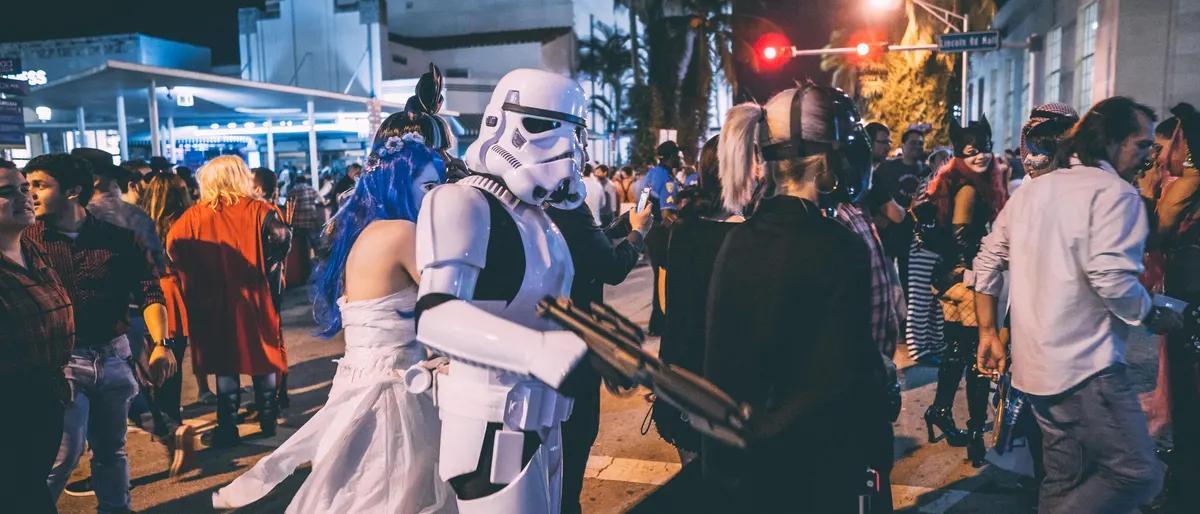
Haunted Halsted Halloween Parade 2026: Chicago's Gay Halloween Guide
Everything you need for Chicago's Haunted Halsted Halloween Parade — the route, the costume contest, the Northalsted bars that go all out, and where to stay that's gay.
Gay Events in Chicago This Weekend: Jul 23–26, 2026
Parvati Shallow's Survivor brunch, Queen! celebrates Lucy's birthday, and G.E.M. turns five at Jackhammer — plus 92 ways to fill your weekend.
Chicago Fetish Weekend 2026: Parties, Contest & Complete Guide
Everything you need for Chicago Fetish Weekend 2026 — the Midwest Rubber & Leather Contest, the Service Station opening party, BUNKER, the leather bars, and where to stay in Northalsted.