
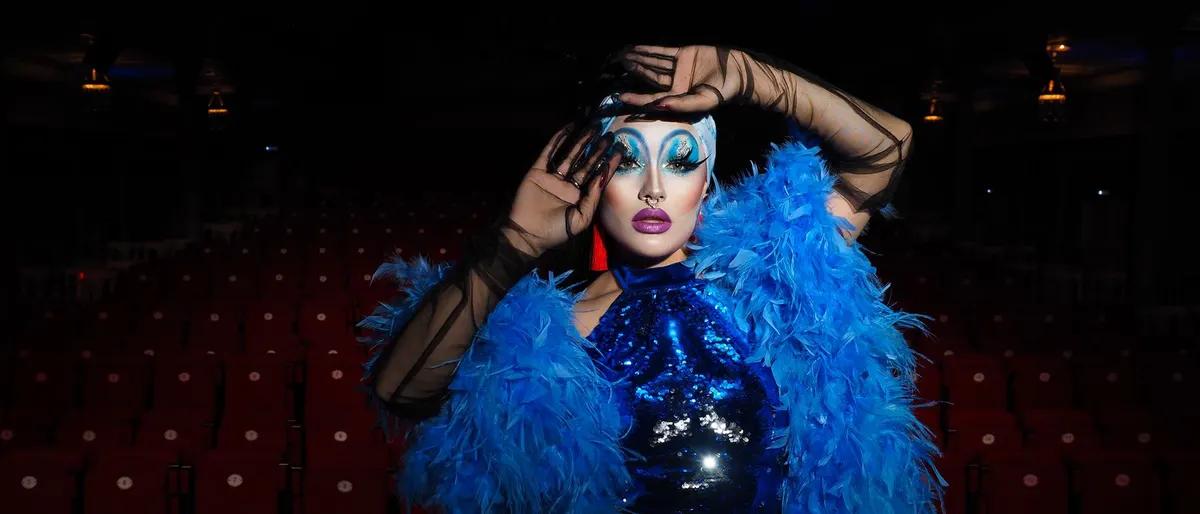
Your First Drag Show: What to Wear, How Much Cash to Bring, and Tipping Etiquette

The practical first-timer's guide to drag: what people actually wear, how much cash to bring, how to hand a tip to a queen without making it weird, and what the room expects of you.
Get LGBTQ+ Travel Tips in Your Inbox
Join our newsletter for exclusive travel guides, local insights, and community updates. No spam, unsubscribe anytime.
Subscribe NowNobody explains a drag show to you before you go. You follow a friend into a bar, and then a seven-foot woman in a sequined gown is standing at your table and you have no idea whether you're supposed to hand her money, put it somewhere, applaud, or make eye contact.
Here it is plainly: what people actually wear, how much cash to bring, how tipping works, and the handful of rules that separate a great first-timer from the person the queen roasts for twenty minutes.
The 30-second version
- What to wear: whatever you'd wear out to a nice bar or restaurant. There is no dress code. Dressing up is welcome and never wrong.
- Cash to bring: $10–$20 for a casual bar show, $20–$40 for drag brunch — in singles and fives, not one big bill.
- How to tip: cash, held out flat in your hand for the performer to take — during a number, not after it.
- The one hard rule: you do not touch a performer. They can touch you. That direction only runs one way.
- How long it runs: roughly 90 minutes to two hours, usually in two or three sets with breaks.
What to wear to a drag show
The honest answer: anything. Nobody at the door is assessing your outfit, and no drag venue in America is turning you away for wearing jeans. If you show up in what you wore to dinner, you're dressed correctly.
That said, "anything" isn't useful when you're standing in front of your closet, so here's what the room actually looks like:
- Bar shows and neighborhood drag skew casual — jeans, sneakers, a good shirt. What you'd wear to any bar on a Friday.
- Ticketed shows and dinner revues skew slightly up. Not formal, but people put in effort. Date-night clothes.
- Drag brunch is the dressiest of the three and the most fun to dress for. Sundresses, a linen shirt, a blazer with sneakers — it reads brunch, not club.
- Poolside brunches in Palm Springs and Las Vegas are the exception, where swimwear plus a cover-up is genuinely normal.
- Themed nights say so on the listing. If a theme exists, leaning into it is the correct move.
What to actually avoid is a shorter list:
- Anything you'd hate getting a drink spilled on. These rooms are packed, dark, and enthusiastic.
- Heels you can't stand in for two hours. Bar shows are frequently standing-room, and the good spots go to whoever got there early and stayed put.
- A costume of an identity that isn't yours. Dressing up is great. Wearing someone's culture, body, or transness as a bit is not.
- A look that competes with the performers. Full drag in the audience is welcome in most rooms, but pulling attention during someone else's number reads badly.
Pro Tip
If you want the queens to notice your table, coordinate something small across the group rather than dressing loud individually — matching color, silly hats, any visible bit. Performers read a room fast and reward a group that came to play.
What to wear to a drag brunch
Same answer, daytime version — brunch venues are restaurants first, so the floor is whatever that restaurant normally expects, which is usually nothing. One practical note: brunch happens in daylight, and nearly every table ends up taking a group picture with the queen. Dress for the picture.
How tipping at a drag show works
Direct answer: you tip in cash, during the performance, by holding the bill out where the performer can take it. Not after the number. Not on the table. Not on your card at the end.
This is the part that trips people up, so here it is step by step:
- Have the bill out before you need it. Digging through a wallet while a queen waits at your table is the awkward version of this.
- Hold it out flat, arm extended. The performer comes to you and takes it — some with a hand, some with more theatricality. Follow their lead.
- Do it during the number. Tipping is part of the performance; the queen works the room mid-song and that's the window.
- If the stage has a lip, set bills on the edge — the standard alternative where a raised stage keeps the performer out of reach.
- Card tips are a fallback. A tip QR code or a line on the check works, but it's often split house-wide. Cash goes straight to the person who did the number.
And the rules that matter more than any of the above:
- Never touch a performer. Not their body, hair, costume, or wig. They may touch you — grab your shoulder, sit in your lap, take your drink. That consent runs one direction and it isn't reciprocal.
- Throwing money: read the room. Making it rain is genuinely welcome in some rooms — big club nights, pageant-circuit shows, and plenty of individual performers invite it. In a small bar it just puts bills on a floor someone has to gather up in heels. If nobody else is doing it, don't be the first.
- Don't tuck money anywhere. Not the wig, not the dress. Hand, only hand.
- Tip the host too, not just the headliner. The MC works the whole show and often gets tipped the least.
Pro Tip
Tips are how most drag performers actually get paid. Free bar shows in particular often pay a small flat fee or nothing at all, and the room's cash is the wage. Assume the money matters more than it looks like it does.
How much cash to bring to a drag show
Real numbers, by format:
- Free or low-cover bar show: $10–$20 in singles — a dollar or two per performer across a lineup of four to six, plus extra for whoever wrecked you.
- Ticketed show or dinner revue: $20–$30 on top of the ticket. A cover charge is not a tip and doesn't reach the performers.
- Drag brunch: $20–$40 per person. Brunch runs longer and the interaction is closer, so the tipping is more continuous.
- Birthday, bachelorette, or any group that wants attention: $40–$60. If you want the queen back at your table repeatedly, that's the price of admission.
- Charity nights and drag bingo: bring extra beyond tip money — raffles, side games, and fundraising rounds are the point of the evening.
Bring singles and fives. A twenty is one gesture; twenty singles is twenty moments across a whole show. Break your cash before you arrive — the bar will do it, but not cheerfully at 11pm.
Pro Tip
Don't count on the ATM inside the venue. Bar ATMs take a few dollars off the top, run out on busy nights, and the line for one during intermission is its own small tragedy. Hit your own bank's ATM on the way.
Drag show vs drag brunch vs drag bingo
Three different nights out that all involve a drag queen and a microphone.
What is a drag show
A performance, usually at night, in a bar or club or theater. A lineup does numbers — lip sync, live vocals, dance, comedy — with a host holding it together. You stand or sit, you drink, you tip. Our guides to Chicago and New York break down which venues run which nights.
What is a drag brunch
A drag brunch is the same performance grafted onto a restaurant service: you reserve a table, order food, and the show happens between courses across roughly 90 minutes to two hours, wrapping by mid-afternoon. Most run Saturday, Sunday, or both. It's the easiest first drag experience for anyone nervous about a nightclub — daylight, chairs, a hard end time, and a bill you can see coming. We track drag brunches across 20+ cities with the day each one runs, and New York alone has enough to fill a month of Sundays.
What is drag bingo
A game night hosted in drag, and very often a fundraiser. You play real bingo, the queen insults you affectionately, and the money frequently goes to a local cause. It's the most participatory of the three and the friendliest to a mixed group. Here's where to find it.
If you're deciding: brunch for a group with anyone nervous, bingo for a group that wants something to do, a night show if you want the art form at full volume.
Audience etiquette: the rules nobody posts
The short version: be a great audience and you'll never do anything wrong. The longer version:
- Phones are fine; filming a whole number isn't. A few photos and clips are normal and performers generally want them. Watching the entire show through your screen is what reads as rude. Some venues ask you to keep phones down entirely — they'll tell you.
- Don't talk during numbers. This one is enforced by the queen, publicly, and it is not gentle. A performance is a performance even when there's a burger in front of you.
- React out loud. Drag is call-and-response. Cheer, gasp, applaud the death drop, answer when the host asks the room a question. Silent politeness is the worst possible audience.
- Heckling is not participation. The host may roast you; that's the job. Roasting back from a dark room is an interruption.
- If you're pulled onstage, you can say no. A clear head shake is respected instantly. If you say yes, commit — the bit works better and it's over faster.
- Requests, mostly no. Sets are planned and tracks are cued, and "do a Drag Race song" is a request every working queen has heard several thousand times.
- Ask before photos, and tip the staff separately. Photos after the show, at the bar, with a yes. Tipping the queens doesn't cover your bartender.
Straight people and bachelorette parties at drag shows
Both are welcome. Drag rooms have been mixed for decades and most venues actively want a full house. Bachelorette parties, birthday groups, coworkers, parents in from out of town — all normal, all present on any given weekend.
The etiquette that comes with the welcome is short:
- You're a guest in an LGBTQ+ space, and often the only one in that city. The show may center you for a bit — it will not center you all night, and that's the deal.
- Don't treat performers as props. Photos on request. No grabbing. The wig is not a novelty item.
- Tip generously and don't take over the room. The reputation problem isn't that bachelorette parties show up, it's that some arrive loud, ignore the show, and tip nothing. A group that watches, cheers, and tips gets adopted by the queen and becomes part of the night.
How long a drag show runs, and when to arrive
Most shows run 90 minutes to two hours, split into two or three sets with breaks — the breaks are when the bar makes its money and when you can move, grab a drink, or leave without walking out on someone's number. Brunch runs about the same from seating to check.
Timing is what first-timers get wrong most:
- Bar shows start later than advertised. A show billed at 10pm often begins at 10:20 or 10:30. That's normal, not a sign anything's wrong.
- Get there 30–45 minutes early for a free bar show. Seating is first-come and the front fills first — and the front is where the show happens to you rather than in front of you.
- For ticketed shows, arrive at doors, not at showtime; most assign seating by arrival within your tier.
- For brunch, reserve ahead and arrive on time. There's a real service schedule and a hard turn for the next seating. Popular shows book out a week or two ahead; holiday and Pride weekends go a month out.
- Where you sit matters. Front and center gets interaction, and possibly gets you pulled into a bit. If that's a nightmare, sit a few rows back and to the side.
Pro Tip
If you're booking for a birthday or a first-timer, tell the venue when you reserve. Nearly every drag venue will work a table into the show if they know in advance — and a queen shouting your friend's name from the stage is the entire reason to have gone.
Where to go for your first one
The easiest first show is a drag brunch in a city where you already know how to get home. After that, a free neighborhood bar show is the art form at its most unfiltered.
- Drag brunch, city by city — 200+ brunches across 22 metros, with the day each one runs.
- Drag brunch in New York — the deepest brunch bench in the country, and the easiest city to book one last-minute.
- Drag shows in Chicago — dinner revues, nightclub drag, and neighborhood bar shows, sorted by night.
- Drag shows in New York — the deepest bench of venues in the country.
- Drag shows in Las Vegas — the easiest city to see three shows in one weekend.
- Drag bingo across America — the friendliest format for a mixed group.
- The best gayborhoods in America — where the bars, and the shows, cluster.
Find a drag show near you tonight
Drag shows, brunches, and bingo nights — live event listings in 100+ cities on Out x Out.
Frequently asked questions about your first drag show
What should I wear to a drag show?
Whatever you'd wear to a nice bar or restaurant. There's no dress code at the overwhelming majority of drag venues. Bar shows skew casual, ticketed and dinner shows skew slightly dressier, and dressing up is always welcome. Avoid heels you can't stand in for two hours at standing-room bar shows, and skip anything that turns an identity into a costume.
What should I wear to a drag brunch?
Whatever you'd wear to brunch. It's the dressiest of the drag formats and the most fun to dress for — sundresses, a linen shirt, a blazer with sneakers all fit. Poolside brunches in Palm Springs and Las Vegas are the exception, where swimwear and a cover-up is standard.
What is a drag brunch?
A drag show performed during a restaurant's brunch service. You reserve a table, order food, and performers do numbers between courses across roughly 90 minutes to two hours, finishing by mid-afternoon. Most run Saturday, Sunday, or both. It's the most approachable format for a first-timer or a mixed group — daylight, assigned seating, and a hard end time.
How much cash should I bring to a drag show?
Bring $10–$20 in singles for a casual bar show, $20–$30 for a ticketed show or dinner revue, and $20–$40 per person for drag brunch. If you're celebrating a birthday or bachelorette and want the performers at your table, budget $40–$60. Break your cash into ones and fives before you arrive.
Do you tip at a drag show?
Yes. Tipping is how most drag performers are paid, especially at free bar shows where the room's cash is effectively the wage. Tip in cash, during the number, by holding the bill out for the performer to take. A cover charge or ticket price is not a tip and generally doesn't reach the performers.
How much do you tip a drag queen?
A dollar or two per performer is a normal baseline, more for a number that got you. Think in total-per-show terms rather than per-bill: $10–$20 across a bar show, $20–$40 at brunch. Many small tips beat one large one — twenty singles gives you twenty moments in the show.
Do you tip at a drag brunch?
Yes, and it's separate from tipping your server. Nothing in a brunch package — not the ticket, not the bottomless mimosas, not the auto-gratuity on large parties — reaches the performers. Keep $20–$40 per person in cash aside for the queens, and tip your server normally on the check.
Can you touch a drag queen?
No. Never touch a performer, their hair, their costume, or their wig, and don't tuck money anywhere on them. Hand the bill to them. Performers frequently touch audience members as part of the act — that consent runs one direction only.
Can straight people go to drag shows?
Yes, and they always have. Drag rooms are mixed and most venues want a full house. The expectation is that you show up as a good guest: watch the show, cheer, tip, ask before photos, and remember you're in an LGBTQ+ space that exists for more than one night a week.
Are bachelorette parties allowed at drag shows?
At most venues, yes. A handful of bars limit large groups on their busiest nights, so it's worth checking the venue's own page before you build a night around one. The way to be a welcome group rather than a tolerated one is simple: tip generously, actually watch the show, keep your volume at the room's level, and tell the venue you're coming when you book.
How long is a drag show?
Usually 90 minutes to two hours, run as two or three sets with breaks between. Drag brunch runs about the same from seating to check. Bar shows commonly start 15–30 minutes after their advertised time — arrive 30–45 minutes early anyway if you want a seat with a view.
Will I get pulled on stage?
Only if you sit up front, and only if you agree. Hosts read a room for willing participants and a clear no is respected without a fuss. If you'd rather not risk it, sit a few rows back and off to one side — you'll see everything and the attention goes elsewhere.
Enjoyed this article?
Subscribe to our newsletter for more LGBTQ+ travel guides, local discoveries, and community stories delivered to your inbox.
Subscribe to Newsletter
Robbie S.
I'm Robbie, the founder of Out x Out. I'm from Minneapolis, though I'm spending 2026 building this community from the road — somewhere between South America and Asia. The idea for Out x Out came from a trip to Berlin, where the gay nightlife calendar was years ahead of ours: you could see not just where to go out, but which night to go — so naturally I wanted that kind of insider info for every city in the US (and beyond... eventually). I'm more of a behind-the-scenes type, but the whole point of this is connection: I'd take one real one over a hundred surface-level ones, and I'm trying to build that for the community, city by city.
Related Posts
First Time at a Gay Bar: What to Expect (and Why You Should Go)
A gay bar is a bar. Here's what actually happens on a normal night, why walking in alone is easier than you think, and how to pick the right one for your first time.
Gay Bathhouse 101: What to Expect and the Etiquette Nobody Tells You
A calm, practical answer to every question first-timers actually have about gay bathhouses — how check-in works, the unwritten rules, what things cost, and why almost everyone there came alone.

What Is a Drag Queen? History, the Craft, and Every Question You've Wondered About
Drag is an art form, not an identity, and what people assume about it is off. Here's what a drag queen actually is, where drag came from, what the job pays, and how the illusion gets built.