
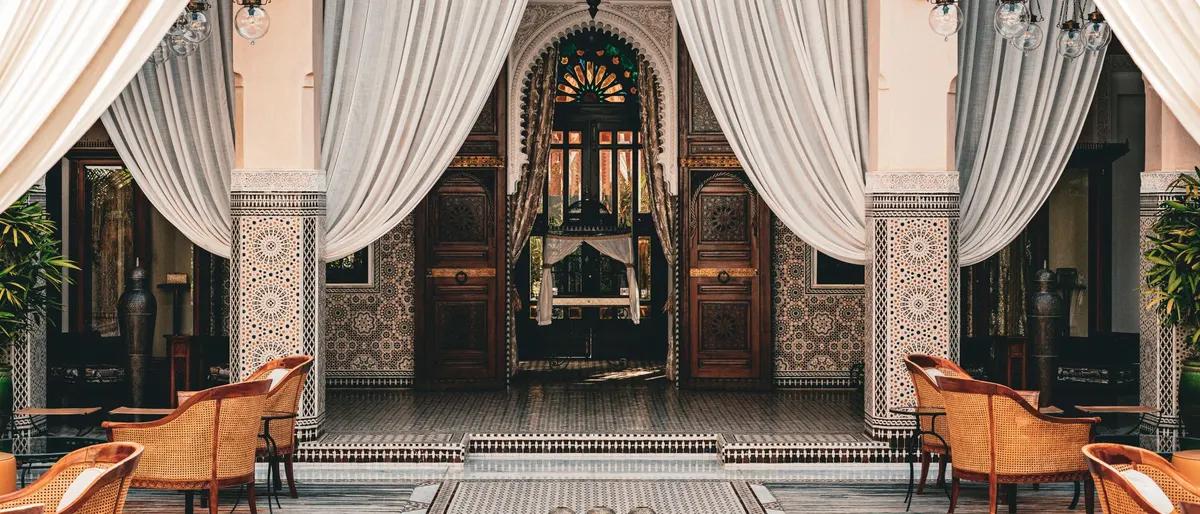
Is Morocco Safe for Gay Travelers? What to Know Before You Go

Same-sex relations are illegal in Morocco, and the law is enforced, mostly against Moroccans. Gay couples still visit Marrakech on discretion terms. Here is what that means at the hotel, on apps and on the street.
Get LGBTQ+ Travel Tips in Your Inbox
Join our newsletter for exclusive travel guides, local insights, and community updates. No spam, unsubscribe anytime.
Subscribe NowMorocco is not Gay Friendly in law: same-sex relations are a crime, and the law is enforced, mostly against Moroccans. Gay travelers still go to Marrakech, Fes and the desert, and foreign visitors are arrested far less often than Moroccans, but it does happen. This guide covers the law as of October 2026, how it is applied to visitors, what to expect at hotels and on apps, and how to decide whether the trip is right for you.
The Verdict
- The short answer: two foreign men can visit Marrakech and share a room, and gay couples visit every year on these terms, but your relationship is illegal there, so the trip only works if you keep it private in public.
- The law: same-sex relations are a crime under Article 489 of the penal code, punishable by six months to three years in prison. It applies to women as well as men, and to visitors.
- Public affection: the UK government says "showing affection in public can lead to prosecution." Avoid it entirely.
- Hotels: booking one room together is routine for foreign travelers. Bringing a Moroccan man back to your room is where the risk sits.
- General safety: the US State Department rates Morocco Level 2, "Exercise Increased Caution," because of terrorism risk, not LGBTQ+ issues.
The Law in 2026: Article 489
Article 489 punishes "lewd or unnatural acts with an individual of the same sex" with six months to three years in prison and a fine of 120 to 1,000 dirhams, according to the Human Dignity Trust, which tracks laws that criminalize LGBT people. It covers women as well as men. The US State Department's Morocco page, updated July 30, 2026, says: "Consensual, same-sex sexual relations are criminalized in Morocco. Penalties include fines and up to three years' imprisonment."
A separate law, Article 490, criminalizes sex between unmarried men and women, and there is no legal recognition of same-sex couples.
Morocco's Justice Minister, Abdellatif Ouahbi, said in 2023 that the government was "moving towards decriminalisation" of sex outside marriage in private, but did not say whether that would include Article 489, and in June 2023 he said homosexuality could not be legalized in Morocco. The Human Dignity Trust reports that in April 2026, local media said the revised penal code was unlikely to be tabled in the current session. As of October 22, 2026, Article 489 is in force.
How the Law Is Enforced
This is not a law that sits unused. Official figures compiled by the Human Dignity Trust show 197 prosecutions in 2017, 170 in 2018 and 122 in 2019, then 283 between January and October 2022 and 441 in the first half of 2023 alone. In August 2026, police in Fes arrested eight people, including two minors, on suspicion of offenses including drug use, vandalism, public indecency and homosexual acts, according to the Moroccan news site Yabiladi.
Most of the reported cases involve Moroccans, but foreigners appear in the record too:
- Marrakech, 2014: a British tourist, Ray Cole, was arrested with a Moroccan friend. A photo on his phone was used as evidence, he was sentenced to four months, and he was released after about 20 days in jail when his lawyers appealed (NBC News).
- Marrakech, 2016: a 70-year-old Spanish man and a Moroccan man in his 20s were reported to police by hotel staff. The Spanish man was released; the Moroccan man stayed in custody (Morocco World News).
- Marrakech, 2023: police arrested four people, including a foreigner, for homosexuality and drug possession; it is not clear whether they were charged (Human Dignity Trust).
- Near Marrakech, 2024: authorities went to a hotel in the Ourika area to stop a same-sex wedding celebration between a French man and a New Zealander (Bladi).
In both the 2014 and 2016 cases, the foreign visitor was released while the Moroccan man stayed in custody. The person carrying most of the risk in any encounter is often the local man, not you.
Public attitudes are a large part of the picture. In Afrobarometer's 2024 survey, reported by Morocco World News, only 2.5% of Moroccans voiced any degree of acceptance of LGBT people. The Spartacus Gay Travel Index 2026 ranks Morocco 183rd of 216 destinations (February 2026, a shared rank).
Why Gay Travelers Still Go
Morocco has a long history as a destination for gay writers and artists. William Burroughs wrote Naked Lunch in Tangier, and AFAR's 2023 feature on gay travel in Morocco names Truman Capote, Tennessee Williams and Gore Vidal among the visitors of the mid-20th century. Today, Marrakech's riads, the Atlas Mountains and the Sahara draw large numbers of tourists.
The terms are discretion. A gay Moroccan quoted by AFAR under a changed name put it plainly: "Kissing in public is a no-no. But it's also a big no-no for heterosexuals. Romance and sexuality are private matters." The Moroccan novelist Abdellah Taïa told AFAR that foreign travelers don't have to worry as much as LGBTQ+ Moroccans do.
Hotels and Riads
The well-known hotel rule in Morocco is about unmarried Moroccans. Until May 2024, hotels asked Moroccan couples for a marriage certificate, and The New Arab reported that the requirement "only affected Moroccan passport holders" before local authorities instructed hotels to drop it in May 2024 (The New Arab). The UK government says the law on unmarried people sharing a room "does not generally apply to visiting foreign nationals, particularly in popular tourist areas." That guidance is about the rule for unmarried couples; Article 489 still applies to same-sex couples.
In practice:
- Two foreign travelers: booking a double or twin room together is routine. You don't need to explain your relationship, and you shouldn't volunteer it.
- One bed or two: our advice is that twin beds are an option if you want to avoid questions from staff, but they are not required.
- International chains: AFAR names the Four Seasons and Nobu Hotel in Marrakech as "LGBTQ-friendly international brands." Large hotels deal with foreign guests every day and are an easier option.
- Riads: these small guesthouses in the old medinas have only a handful of rooms and staff who see everything. You are more visible than in a large hotel, so keep affection inside your room.
- Hammams: we don't recommend seeking out any "gay hammam." If you want a hammam, one at your hotel or a spa, booked for the two of you, is the private option.
- Visitors to your room: the 2016 Marrakech case started when hotel staff found a foreign guest and a Moroccan man together. Do not bring local men back to your hotel or riad.
How to Travel Safely
- No public affection: no hand-holding, kissing or arm around the shoulder, especially near religious sites and in tourist areas, which the UK government singles out.
- Your phone: in the Ray Cole case, a photo on a phone was used as evidence. The UK government also says it is illegal to possess pornographic material in Morocco, including digital material, so clear your phone and cloud-synced albums of anything intimate before you travel.
- Dating apps: Grindr's own help page lists Morocco as a country where the app is removed from the app store, not one where the government blocks it, so it can't be downloaded locally, and Grindr notes that internet censorship may prevent access. The UK government says "using dating applications in Morocco may break laws relating to sexual relations outside of marriage" and that meeting people through apps carries legal, personal safety and privacy risks, and the US State Department warns that dating-app scams target Americans. In 2020, an online campaign outed Moroccan men by sharing their app profiles, according to Human Rights Watch. We recommend not using apps in Morocco at all.
- Extortion: the UK government warns that marriage fraud and attempted extortion have affected British nationals. If anyone threatens to report you, we would contact your embassy rather than pay.
- Traveling solo: solo travelers carry most of the app and extortion risk. The US State Department advises against traveling alone to bars or nightclubs.
- Guides and drivers: the UK government says it is common for people posing as official tourist guides to harass tourists. Use a reputable tour company or a hotel-booked driver, and if you hire a guide in a medina, make sure they have an official badge.
- If something goes wrong: police are 190 and ambulance is 150. US citizens can call the US Consulate General in Casablanca on +212-5226-42000 (after hours +212-537-63-72-00). British nationals should contact the British Embassy in Rabat. If you are detained, ask for your consulate to be contacted before you sign anything.
Gay Bars and Nightlife in Morocco
There is no public gay scene in Morocco, no gay bars that operate openly, and no Pride. We are not naming venues, because naming places where gay Moroccans meet can put them at risk. The Morocco most gay travelers see is the same one every tourist sees: the medinas, the riads, the food and the landscape, with their own relationship kept private.
Gay Friendly Alternatives to Morocco
For Moorish architecture without a criminal law hanging over you, our safest countries for gay travelers index covers Spain and Portugal, which have marriage equality. For markets, courtyards and food, our Mexico City guide covers a city with marriage equality and a large gay scene, and our guide to whether Mexico is safe for gay travelers covers the rest of the country, including Puerto Vallarta. If you are weighing other countries with harder rules, our guide to whether Turkey is safe for gay travelers covers a country where same-sex relations are legal but the climate has hardened in 2026.
Frequently Asked Questions
Is Morocco safe for gay travelers?
It depends on what you are willing to accept. Same-sex relations are illegal and prosecuted, mostly against Moroccans. Foreign visitors have been arrested too, including a British tourist who spent about 20 days in jail in 2014 and a foreigner arrested in Marrakech in 2023. Two foreign travelers who share a hotel room and keep affection private face far less risk than those who don't. The risk rises sharply with public affection, dating apps or bringing a Moroccan partner back to your room.
Is being gay illegal in Morocco?
Yes. Article 489 of the penal code punishes same-sex acts with six months to three years in prison and a fine. As of October 2026, it has not been repealed, and there is no legal recognition of same-sex couples.
Is it illegal to be gay in Morocco as a tourist?
Article 489 applies to everyone in Morocco, including visitors. Most reported prosecutions involve Moroccans, but foreign tourists have been arrested, including a British man jailed in Marrakech in 2014 and a foreigner arrested there in 2023.
Can two men share a hotel room in Morocco?
Yes. Hotels and riads routinely rent rooms to two foreign travelers. The UK government says the rules on unmarried people sharing a room do not generally apply to foreign visitors, particularly in tourist areas. That guidance is about the rule for unmarried couples; Article 489 still applies to same-sex couples, so keep affection inside your room. Do not bring Moroccan visitors back to your room.
Can I hold hands with my partner in Marrakech?
No. The UK government says showing affection in public can lead to prosecution and advises avoiding it, particularly near religious sites and in tourist areas. Keep hand-holding, kissing and arms around each other for your room.
Is Morocco safe for lesbian couples?
Article 489 applies to women as well as men, according to the Human Dignity Trust, and two teenage girls were tried in Marrakech in 2016 after being seen kissing. The UK government also notes that women may receive unwanted attention, especially when traveling alone. The same advice applies: share a room and keep affection private.
Is Morocco safe for trans travelers?
A Moroccan LGBT coalition, cited by the Human Dignity Trust, says trans people face de facto criminalisation under Article 489 and Article 283, which punishes "outrage to public decency," and the Trust cites a 2023 US State Department report finding the law was used to harass people for their gender expression. Trans travelers face more risk of scrutiny than cisgender gay couples, and we would not recommend Morocco as a first choice.
Does Grindr work in Morocco?
Grindr says it is removed from the app store in Morocco but does not list it as blocked by the government. The UK government warns that using dating apps there may break the law and carries safety and privacy risks, and a 2020 campaign outed Moroccan app users. We recommend not using dating apps in Morocco.
Is Marrakech gay friendly?
Marrakech is used to foreign tourists, including gay couples, and AFAR describes the Four Seasons and Nobu Hotel there as Gay Friendly international brands. But the city has no open gay scene, the law still applies, and public affection should be avoided. Treat it as a place you can visit discreetly, not a Gay Friendly destination.
Enjoyed this article?
Subscribe to our newsletter for more LGBTQ+ travel guides, local discoveries, and community stories delivered to your inbox.
Subscribe to Newsletter
Robbie S.
I'm Robbie, the founder of Out x Out. I'm from Minneapolis, though I'm spending 2026 building this community from the road — somewhere between South America and Asia. The idea for Out x Out came from a trip to Berlin, where the gay nightlife calendar was years ahead of ours: you could see not just where to go out, but which night to go — so naturally I wanted that kind of insider info for every city in the US (and beyond... eventually). I'm more of a behind-the-scenes type, but the whole point of this is connection: I'd take one real one over a hundred surface-level ones, and I'm trying to build that for the community, city by city.
Related Posts
The Best Vacations for Gay Men Over 40: Where to Go, Where to Stay, and What to Expect
After 40 the velvet rope matters less and the pool deck matters more. Here are the six destinations that deliver, the bear weeks and cruises built for a slower pace, and where to stay in each, drawn from our venue listings and event guides.
The Gay-Friendly Caribbean: Which Islands to Book and Which to Skip (2026)
Caribbean law has changed fast since 2022, in both directions. Here is the current legal picture island by island, the places that are easy to book, the ones that take judgment, the ones still criminalizing gay sex, and where a cruise makes more sense than a stay.
Is Japan Gay Friendly? What Travelers Should Actually Expect
Same-sex relations are legal in Japan and its US travel advisory is at the lowest level; Tokyo has a gay district and a Pride with about 270,000 total attendances in 2026. It is also quiet about it: there is no national same-sex marriage, and public affection is uncommon for everyone. Here is what to expect.