New York Has a Bill to Fully Legalize Gay Bathhouses. Simone: 'It's 2026, not 1986.'
Two out lawmakers want to undo a 1985 emergency rule that became permanent policy. The lawyer who has long represented these spaces says the city building code — not the health code — is the real obstacle.


Forty years after New York shut its bathhouses at the height of the AIDS epidemic, two out gay lawmakers have introduced a bill to make them legal again — and to make the state write the rules for running one.
State Sen. Erik Bottcher and Assemblymember Tony Simone, whose Manhattan districts overlap on the west side, are behind the Public Health Modernization Act. It would have the state's health department repeal a provision holding that “no establishment shall make facilities available for the purpose of sexual activities where anal intercourse, vaginal intercourse, or fellatio take place. Such facilities shall constitute a threat to the public health.” Should the bill become law, the department would then have 180 days to publish licensing, health and safety standards for operating one legally. Hoodline, citing W42ST, numbers the bill S10673.
“It's 2026, not 1986,” Simone told Gay City News, whose reporting carries interviews with Bottcher, Simone and one of the businesspeople hoping to build a new one. “Evidence-based practices informed by the last 30 years of public health research make it clear we need to repeal the ban.”
Bottcher and Simone announced it on Instagram on August 5. Bottcher's post, as quoted by the Star Observer, is the sharpest version of the case, as we read it: “In 1985, during the panic of the AIDS epidemic, New York ordered them closed. Emergency measures somehow became permanent policy.” He went on: “The ban is simply pushing people into less safe, unregulated settings, undermining the very public health goals it was meant to serve.”
What the 1985 rule actually was
The rules date to October 1985, when the State Public Health Council adopted emergency changes to the State Sanitary Code under Gov. Mario Cuomo, giving state and local officials the power to close bathhouses as public nuisances. Hoodline traces that history through Los Angeles Times reporting. The closures survived a court challenge the following January, when a state court decided City of New York v. New St. Mark's Baths in the city's favor, holding that the public health emergency outweighed patrons' privacy and associational claims.
Bottcher says New York has become an outlier. Minneapolis ended its 38-year ban this June, when Mayor Jacob Frey signed council legislation directing city departments to build a modern licensing system. San Francisco has been unwinding its 1984 restrictions since 2020. “New York is unique among major cities in not allowing these establishments,” he told The Advocate. “That simply doesn't make sense anymore.”
Somebody is already thinking about the venue
Alex Gabriel — Rally AI's co-founder and chief executive, and a former Out for Biden co-chair — told Gay City News that he and a group of other business owners have been working quietly toward a large bathhouse in the city, should the legislation pass. He named three possible areas: Chelsea, the Flatiron district, or somewhere in Brooklyn. Gay City News frames what the bill could enable as a venue of more than 10,000 square feet.
“What we're doing is trying to model what Copenhagen, Amsterdam, or Berlin have — a world-class bathhouse,” Gabriel said. Steam room, sauna, and an LED light room: “Kind of a dark place with world-class spa amenities.” He would seek approval to serve alcohol, and hopes the bill passes this year so construction could start early next — possibly as early as February.
It is worth being precise about what that is. It is an idea, contingent on a bill that has not passed, from a chief executive who has not announced a site.
The building code, not the health code
Thomas Shanahan, the attorney for the businesspeople behind the proposed venue, has long represented these spaces — East Side Club, the since-shuttered West Side Club, and River Street Club in Troy. His point is that repealing the health rule is the easy half. “The bill will open the door to an environment that is welcoming and allow potential investors to build things out,” he said. “However, there is a lot of nuance here that has to change, because under New York City's building code, there is no use that would allow for this.”
He has the scar tissue. At West Side Club in 2014-15, he said, “a Department of Buildings inspector just walked in, saw HIV testing materials from GMHC, looked around, and gave us a violation for being a brothel.” Those violations, he said, were later thrown out after he challenged the city in court. Two decades ago, he said, he worked with investors who wanted a large bathhouse near Grand Central and lost their money when the city issued a stop-work order. And in San Francisco, where the law already changed, Gay City News reports — citing the Bay Area Reporter — that an actual bathhouse launch has been bogged down in permitting.
Bottcher acknowledges the gap. “There's not a clearly defined use group for this kind of facility,” he told Gay City News. “So our legislation both orders the state to eliminate the prohibition and create the regulatory framework that would be necessary for new businesses to open.”
The number that complicates the pitch
The public health case is the bill's whole argument, so the data belongs in the piece. Hoodline reports that the city health department's December 2025 surveillance report counted 1,791 New Yorkers receiving a first HIV diagnosis during 2024 — up 5.4% on the 2023 figure, and — following what Hoodline describes as pandemic-era disruptions to care — a fourth straight year with no annual drop. Statewide, the same month, the state reported new diagnoses down 36% between 2011 and 2024, with the burden still falling disproportionately on Black and Hispanic New Yorkers.
Hoodline puts those numbers forward as tension in the timing, and does not tie them to bathhouses either way. The Advocate carries the supporters' general answer: regulated businesses give public health officials openings that do not exist when sex is pushed into informal or unregulated settings. Callen-Lorde, whose chief medical officer is Dr. Demetre Daskalakis — who used to run HIV prevention at the CDC — has backed the act, according to the provider's own announcement as relayed by Hoodline.
Where it stands
Gay City News asked Gov. Kathy Hochul and Mayor Zohran Mamdani where they stand on August 4 and got no response from either.
As for what is left: Gay City News calls East Side Club “perhaps the only remaining gay bathhouse in the five boroughs.” Our own directory currently lists two — East Side Club and Why Not Men's Spa — so the count may genuinely be open, or our listings may simply be out of step with the reporting. Either way it is a fraction of what Gay City News calls the sprawling bathhouse scene the city had before the closures, which ran through 1985, 1986 and the years after.
Simone also pointed out the thing that ought to land hardest in Albany: plenty of cities in more conservative states, Miami and Fort Lauderdale among them, have gay bathhouses or saunas operating right now.
Stay in the Loop
LGBTQ+ travel tips & community updates
More news
 culture
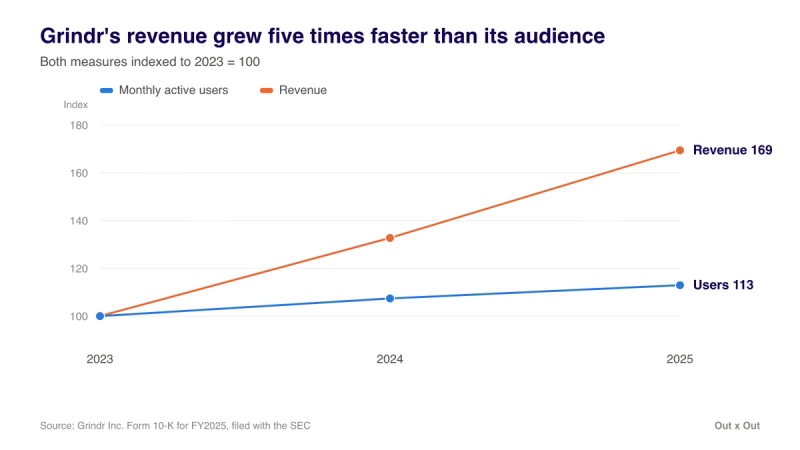
Gay Dating App Statistics 2026: What the Filings Actually Say
Grindr, Sniffies, SCRUFF and Tinder by the numbers. Who is growing, what people really pay, and why the user counts you see quoted aren't comparable.
 news
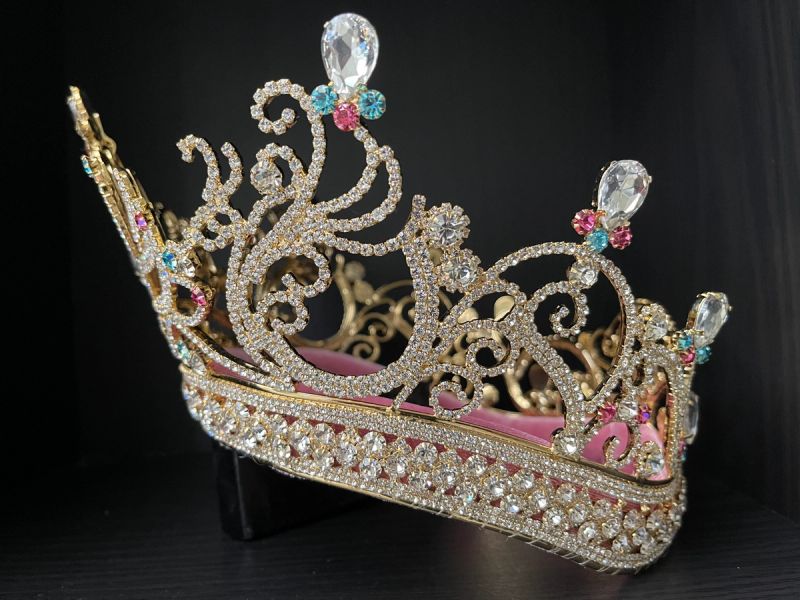
newsMiss North Carolina USA Lost Her Crown as Miss USA Condemned 'Racism, Homophobia, Transphobia'
Miss USA's chief executive named three categories of conduct and never specified what she had done. Two days later, Brittany Boltinhouse said she believes she lost the title over her politics and her faith.
 entertainment
Ryan Murphy's 'The Shards' Is Explicitly Gay, and Critics Are Divided on It
A closeted 17-year-old narrator, a serial killer and 1981 Los Angeles. Here is what is actually in it, and an honest account of a reception that runs from rave to write-off.
 travel
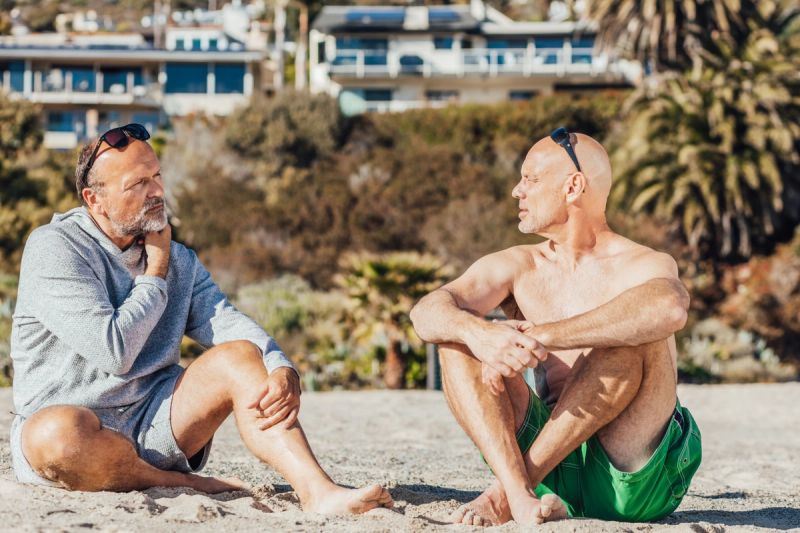
The Best US Cities for Gay Men Over 40
Forget the circuit-party rankings. Here's where gay life over 40 actually works — measured by community you can join, housing you can afford, and bars where you won't be the oldest guy in the room.