
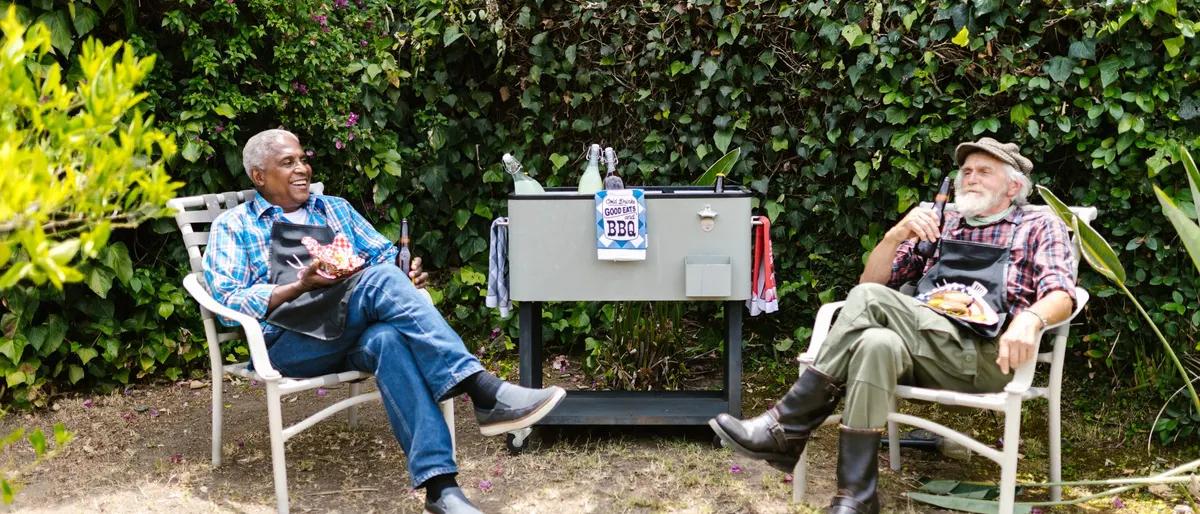
LGBTQ+ Retirement Communities in the US: The Real Options, Checked One by One

Dedicated LGBTQ+ retirement communities are rare, and at least one that still shows up in older articles has closed. We checked each one against its own website in October 2026. Here is what is actually open, what it costs where prices are published, and how to vet a mainstream community.
Get LGBTQ+ Travel Tips in Your Inbox
Join our newsletter for exclusive travel guides, local insights, and community updates. No spam, unsubscribe anytime.
Subscribe NowLGBTQ+ retirement communities in the US come in two very different shapes: a handful of private communities you buy or rent into at market rates, mostly in California, and a larger group of nonprofit affordable apartment buildings in big cities, with age and income limits and waitlists. At least one name that still appears in older articles, The Palms of Manasota, no longer has a working site. We checked every community below against its own website in October 2026, and prices appear only where the community publishes them.
The Short Answer
- Market-rate communities: Living Out Palm Springs (55+ apartments), Fountaingrove Lodge in Santa Rosa (55+ with care services) and Stonewall Gardens in Palm Springs (assisted living).
- Nonprofit affordable buildings: The Pryde in Boston, Town Hall Apartments in Chicago, Stonewall House in Brooklyn, Crotona Pride House in the Bronx, John C. Anderson Apartments in Philadelphia, John Arthur Flats in Cincinnati, Law Harrington in Houston, Pride Place in Seattle, the Openhouse buildings on Laguna Street in San Francisco, Triangle Square and the Ariadne Getty Foundation Senior Housing in Los Angeles, and Mary's House for Older Adults in Washington, DC.
- Florida: the Pride Center in Wilton Manors lists an LGBTQ+ focused affordable senior building, but its site does not make clear whether it is open. The Florida section below covers it and what to do instead.
- Everyone else: a mainstream community that has trained its staff through SAGECare, the credentialing program from SAGE, the national LGBTQ+ elder organization, plus a short list of questions to ask on the tour.
Why LGBTQ+ Retirement Communities Exist
The reason is not the pool or the bar cart. It is the fear of going back into the closet. Justice in Aging, a national legal advocacy nonprofit, put it plainly in its 2010 report on LGBT older adults in long-term care, re-released in 2015: "Imagine being out and proud all of your adult life and then moving into a long-term care facility and having to go back into the closet because you don't feel safe coming out to staff and other residents."
The numbers bear it out. In a June 2022 AARP survey of older LGBTQ+ adults, 41 percent said they were concerned about hiding their identity to avoid housing discrimination as they age, and 58 percent of trans and nonbinary respondents felt they might need to conceal their identity to access housing. A 2021 report from AARP New York and SAGE found that a third of LGBTQ+ seniors in New York worry they will have to re-closet themselves to access senior housing and long-term care.
A dedicated community removes that question. Your spouse is your spouse on the paperwork and at the dinner table, the staff have been trained, and the neighbors are people who lived through the same decades you did.
Pro Tip
None of these communities is exclusive. They are LGBTQ+ designed and LGBTQ+ welcoming, most say "and allies" in the same sentence, and Mary's House says fair housing law requires it to rent to all qualified applicants. Chicago's Town Hall Apartments, for example, says about 60 percent of its residents identify as LGBTQ.
Market-Rate Communities
These are the options most people mean when they search for a gay retirement community: you choose them, you pay market rent or fees, and there is no income test.
Living Out Palm Springs
Living Out is a 55-plus apartment community in Palm Springs built for, in its own words, "active LGBTQ 55+ adults and their allies." It was developed by KOAR International, headed by Loren Ostrow and Paul Alanis, and AARP reported that residents began moving in by November 2023. The apartments run from 1,098 to 1,831 square feet, and the community says rents start at less than $5,000 a month. On-site there is a pool and spa, a fitness center, a salon, a dog park, bocce, a putting green and Gertie's Salon & Bar, a restaurant and bar that the community describes as a nod to the LGBTQ+ tradition of bars as second living rooms. Living Out describes itself as an apartment community and does not advertise care services.
Stonewall Gardens, Palm Springs
Stonewall Gardens on North Palm Canyon Drive is assisted living, which makes it a different decision from the other two market-rate options. It describes itself as an environment "where a diverse group of LGBT seniors and friends can live, relax, and be well," with 24-hour staff who help with medication management, dressing, grooming and bathing. Pricing is available on request rather than published.
Fountaingrove Lodge, Santa Rosa
Fountaingrove Lodge (4210 Thomas Lake Harris Dr., Santa Rosa) is run by Oakmont Senior Living and describes itself as a 55-plus community "created for active LGBTQ+ older adults and their allies." Homes range from one-bedroom apartments to two-bedroom suites and bungalows, and the community has a wellness center with a full-time nurse and assistance with daily living for residents who need it. Pricing is not published on the site.
Palm Springs holds two of the three market-rate options for a reason: it is a city with a large, long-established gay community, a bar strip on Arenas Road, resorts in Warm Sands and a full calendar. Our Palm Springs LGBTQ+ guide covers the city, and Palm Springs Pride in early November is the weekend to visit before you decide.
Nonprofit Affordable Senior Housing
These buildings are rentals with an age minimum, usually 55 or 62, and an income limit, and most have a waitlist or a housing lottery. Rent is typically tied to income. If you qualify, they are often the more affordable option.
The Pryde, Boston
The Pryde is 74 studio, one-bedroom and two-bedroom apartments in a former middle school in Hyde Park, Boston, developed by LGBTQ Senior Housing Inc. with Pennrose. It welcomed its first residents in June 2024 and is open to "LGBTQ people and allies aged 62+" who qualify for affordable housing, with a 10,000-square-foot community center, library and art room on site. As of October 2026 the online waitlist pre-application was open through Pennrose.
Town Hall Apartments, Chicago
Town Hall Apartments is 79 studio and one-bedroom units in a six-story building co-owned by the Center on Halsted. Residents must be 55 or older and low-income. Rent is subsidized through Chicago Housing Authority vouchers, so residents pay 30 percent of their income, and residents get case management from the Center's senior services. As of October 2026 the Center said the waitlist was open. Our Chicago LGBTQ+ guide covers the city.
Stonewall House and Crotona Pride House, New York City
SAGE worked with two developers on what it calls New York State's first two LGBTQ+ welcoming elder housing developments. Stonewall House (271 Myrtle Ave., Fort Greene, Brooklyn) has 145 apartments for seniors 62 and older, according to SAGE, opened in December 2019, and has a SAGE center with meals and programming. Crotona Pride House (1784 Prospect Ave., the Bronx) was developed with HELP USA and houses the SAGE Center Bronx. Both are income-restricted and set aside a share of units for formerly homeless older adults. According to SAGE, Crotona Pride House filled through the city's Housing Connect lottery, and Stonewall House used a first-come, first-served application through the New York City Housing Authority. Our New York City LGBTQ+ guide covers the rest of the city.
John C. Anderson Apartments, Philadelphia
John C. Anderson Apartments (251 S. 13th St.) is listed by its manager, Pennrose, as an LGBTQ+ affirming community for seniors 62 and older, with one-bedroom apartments, a community room and a roof deck. Pennrose lists one-bedroom rents from $990 to $1,205 a month. Our Philadelphia LGBTQ+ guide covers the neighborhood around it.
John Arthur Flats, Cincinnati
John Arthur Flats (4145 Apple St.) is 57 studio, one-bedroom and two-bedroom apartments in a three-story elevator building in Northside, managed by Pennrose, which calls it the first LGBTQ+ affirming 55-plus affordable senior development in Cincinnati. Apartments are affordable to seniors earning 30 to 60 percent of area median income, and the building is a walk from the Northside business district.
Law Harrington Senior Living Center, Houston
Law Harrington Senior Living Center (2222 Cleburne St., Third Ward) is run by the Montrose Center, Houston's LGBTQ+ community center, which describes it as LGBTQ-affirming senior living. It has one-bedroom and two-bedroom independent living apartments for low-income individuals and couples 62 and older, with rents adjusted to area median income. Our Houston LGBTQ+ guide covers the city.
Pride Place, Seattle
Pride Place is the affordable housing project GenPride, Seattle's LGBTQ+ senior organization, describes as the city's first designed for LGBTQ+ adults 55 and older, with below-market rents for income-qualified applicants, apartments managed by Community Roots Housing and a GenPride community center on the ground floor. GenPride's Pride Place page still describes the 2023 application period, so contact GenPride for current availability. Our Seattle LGBTQ+ guide covers the city.
Openhouse Community, San Francisco
55 Laguna and 95 Laguna together hold 117 affordable apartments, developed and managed by Mercy Housing California with services from Openhouse, San Francisco's LGBTQ+ senior organization. 55 Laguna is for households 55 and older and 95 Laguna for 62 and older, in both cases with income at or below 50 percent of area median income. Openhouse runs its senior center at 65 Laguna. Our San Francisco LGBTQ+ guide covers the city.
Triangle Square and the Ariadne Getty Foundation Senior Housing, Los Angeles
The Los Angeles LGBT Center runs two affordable senior buildings in Hollywood: Triangle Square (1602 N. Ivar Ave.), which the Center calls the nation's first affordable LGBT housing development of private, individual apartment homes, and which is for elders 62 and over, and the Ariadne Getty Foundation Senior Housing. As of October 2026 the Center listed the general waitlist as closed and the waitlist for accessible units as open. Our Los Angeles LGBTQ+ guide covers the city.
Mary's House for Older Adults, Washington, DC
Mary's House opened in 2025 and, according to its leasing brochure, has 15 single-occupancy units of affordable communal living for adults 60 and older, with shared space, a regular resident council and social-work support. It describes itself as LGBTQ+ and same-gender-loving affirming and open to all elders regardless of identity. Our Washington, DC LGBTQ+ guide covers the city. In a public letter on its site, Mary's House acknowledges concerns raised in recent news coverage and says it is still in a community-building phase.
Pro Tip
Affordable buildings open and close their waitlists, as the Los Angeles example above shows. If one of these is your plan, get on the building's email list or call the leasing office now, years before you need the apartment.
LGBTQ+ Senior Housing in Florida
Florida comes up often in this search, and the answer is thinner than people expect. The Pride Center at Equality Park in Wilton Manors lists The Residences at Equality Park, which it describes as an affordable housing community with supportive services for LGBTQ+ seniors, with studio, one-bedroom and two-bedroom floorplans. Its site does not make clear whether residents have moved in or how to apply, so contact the Center directly. The Palms of Manasota, which still appears in older articles, no longer has a working site. Beyond that, the practical route is a mainstream community in a city with a large, long-established gay community, vetted with the questions below:
- Fort Lauderdale and Wilton Manors: the gay bar strip on Wilton Drive and the gay guesthouses around it. Our Fort Lauderdale LGBTQ+ guide covers the area.
- St. Petersburg: the Grand Central District bars and St Pete Pride every June. Our St. Petersburg LGBTQ+ guide covers it.
Choosing a Mainstream Community: What to Ask
If none of the communities above fits, a mainstream community is the route. SAGECare, SAGE's credentialing program, trains staff at providers across the US and lists its credentialed providers on its site, which is a quick first filter. On the tour, ask:
- Is the staff SAGECare credentialed, and at what level? A yes is a starting point, not a guarantee.
- Does your non-discrimination policy name sexual orientation and gender identity? Ask to see it in writing.
- How do your forms handle a same-sex spouse or partner? Look at the intake paperwork for "husband/wife" boxes.
- Do you have openly LGBTQ+ residents now, and can I meet one? A useful question to ask in person.
- What happens if another resident is hostile? You want a procedure, not reassurance.
- For couples: can you share a room, and what happens if one of you needs a higher level of care?
Where to Retire as an LGBTQ+ Person
If a dedicated community is not the answer, the city usually is. Our most gay friendly cities in the US ranks metros on the depth of their gay scene, and our gayest states ranking does the same at the state level. For retirement, the cities that come up in this guide share three things: an LGBTQ+ community center with senior programming, a gay neighborhood with bars and restaurants you can reach without a long drive, and at least one of the buildings above. Chicago, Philadelphia, San Francisco, Los Angeles and New York all qualify. If you are scouting before you move, our guide to vacations for gay men over 40 covers the trip version of the same towns.
Costs and Planning Basics
This is not financial advice, and the two kinds of housing above work very differently.
- Market-rate communities are priced like any senior community: monthly rent for independent living, more for assisted living and memory care. Living Out is the only one of the three that publishes a figure, under $5,000 a month.
- Affordable buildings usually have income caps tied to area median income, and many set rent as a share of income, such as Town Hall's 30 percent. Some, like John C. Anderson, publish fixed rents instead. Check the cap for your county before you apply.
- Paperwork matters more for LGBTQ+ couples and single people. A health care proxy, durable power of attorney and an up-to-date help make sure the person you choose is the one making decisions, and a local attorney or legal clinic can confirm what your state requires. SAGE and local LGBTQ+ legal clinics can point you to help.
Find your city's LGBTQ+ scene
Bars, events and community spaces in Palm Springs, Chicago, Philadelphia, San Francisco, New York and more, with a map and a calendar.
Frequently Asked Questions
Are there gay retirement communities?
Yes, but few. The market-rate options we could confirm are Living Out and Stonewall Gardens in Palm Springs and Fountaingrove Lodge in Santa Rosa. The larger group is nonprofit affordable senior housing in Boston, Chicago, Cincinnati, Houston, Seattle, New York, Philadelphia, San Francisco, Los Angeles and Washington, DC.
Are there any gay retirement communities in Florida?
The Pride Center at Equality Park in Wilton Manors lists The Residences at Equality Park, LGBTQ+ focused affordable senior housing, but as of October 2026 its site did not make clear whether it is open, so contact the Center. Otherwise, the practical route is a mainstream community in Fort Lauderdale, Wilton Manors or St. Petersburg, vetted for SAGECare credentialing and a written non-discrimination policy.
How much does an LGBTQ+ retirement community cost?
Living Out Palm Springs says its apartments start at less than $5,000 a month. Stonewall Gardens and Fountaingrove Lodge do not publish prices. John C. Anderson Apartments in Philadelphia lists one-bedrooms from $990 to $1,205 a month. Most of the nonprofit buildings tie rent or eligibility to income, and Town Hall Apartments in Chicago, for example, charges residents 30 percent of their income.
Do you have to be LGBTQ+ to live in one?
No. None of these communities is exclusive, and most describe themselves as for LGBTQ+ people and allies.
What is SAGECare?
SAGECare is the credentialing and training program run by SAGE, the national organization for LGBTQ+ older adults. Senior living providers earn a credential by training their staff, and SAGECare lists credentialed providers on its site.
What is the age requirement?
It varies. Living Out, Fountaingrove Lodge, John Arthur Flats and Pride Place are 55-plus, The Pryde, Stonewall House, John C. Anderson, Law Harrington and Triangle Square are 62-plus, Town Hall is 55-plus, Mary's House is 60-plus, and San Francisco's 55 Laguna and 95 Laguna are 55-plus and 62-plus.
Where is the best place for gay men to retire?
A city with an LGBTQ+ community center, a walkable gay neighborhood and dedicated senior housing nearby. Chicago, Philadelphia, San Francisco, Los Angeles and New York all have all three.
How do I get into an affordable LGBTQ+ senior building?
Join the building's waitlist or the city's housing lottery as early as you can, confirm you meet the age and income limits, and keep your application current. Waitlists open and close, so check each building's site directly.
More Guides
Enjoyed this article?
Subscribe to our newsletter for more LGBTQ+ travel guides, local discoveries, and community stories delivered to your inbox.
Subscribe to Newsletter
Robbie S.
I'm Robbie, the founder of Out x Out. I'm from Minneapolis, though I'm spending 2026 building this community from the road — somewhere between South America and Asia. The idea for Out x Out came from a trip to Berlin, where the gay nightlife calendar was years ahead of ours: you could see not just where to go out, but which night to go — so naturally I wanted that kind of insider info for every city in the US (and beyond... eventually). I'm more of a behind-the-scenes type, but the whole point of this is connection: I'd take one real one over a hundred surface-level ones, and I'm trying to build that for the community, city by city.
Related Posts

The Best Vacations for Gay Men Over 40: Where to Go, Where to Stay, and What to Expect
After 40 the velvet rope matters less and the pool deck matters more. Here are the six destinations that deliver, the bear weeks and cruises built for a slower pace, and where to stay in each, drawn from our venue listings and event guides.
The Gay-Friendly Caribbean: Which Islands to Book and Which to Skip (2026)
Caribbean law has changed fast since 2022, in both directions. Here is the current legal picture island by island, the places that are easy to book, the ones that take judgment, the ones still criminalizing gay sex, and where a cruise makes more sense than a stay.
The Safest Countries for Gay Travelers in 2026, Ranked by What Actually Matters
A travel-focused index built on three things: the law, the social climate and whether there is a scene to enjoy. Here are the easy yeses, the popular-but-complicated places, and the countries to skip, with every legal change through October 2026 dated and checked against named sources.