
Gay Bathhouse 101: What to Expect and the Etiquette Nobody Tells You

A calm, practical answer to every question first-timers actually have about gay bathhouses — how check-in works, the unwritten rules, what things cost, and why almost everyone there came alone.
Get LGBTQ+ Travel Tips in Your Inbox
Join our newsletter for exclusive travel guides, local insights, and community updates. No spam, unsubscribe anytime.
Subscribe NowAlmost nobody explains how a gay bathhouse works before you walk into one. You learn it from a friend who's been, or you learn it in the first fifteen awkward minutes at the front desk — which is why people spend a year thinking about going before they go.
Here's the explanation nobody gave you: what a bathhouse actually is, whether they're legal, what happens step by step on a first visit, what you wear, the etiquette regulars never discuss out loud, what it costs, and the honest answer to the question first-timers are too embarrassed to ask — is it weird to go alone? (No. Most people there did.)
The quick facts
- What it is: a members-only men's venue built around saunas, steam rooms, and private rooms — part spa, part social club, and yes, part cruising space
- What it costs: commonly $10 to $45 for entry, depending on the city and whether you take a locker or a private room
- What you need: a valid photo ID and the entry fee. Towels are provided
- What you wear: the towel. That's the dress code
- Are they legal: yes, in every US state — they're licensed businesses regulated locally
- Going alone: completely normal, and the way the overwhelming majority of visitors go
- Where they are: Out x Out lists 45 bathhouse and sauna venues across 32 US cities, plus venues in Canada, Mexico, and Europe
What a gay bathhouse actually is
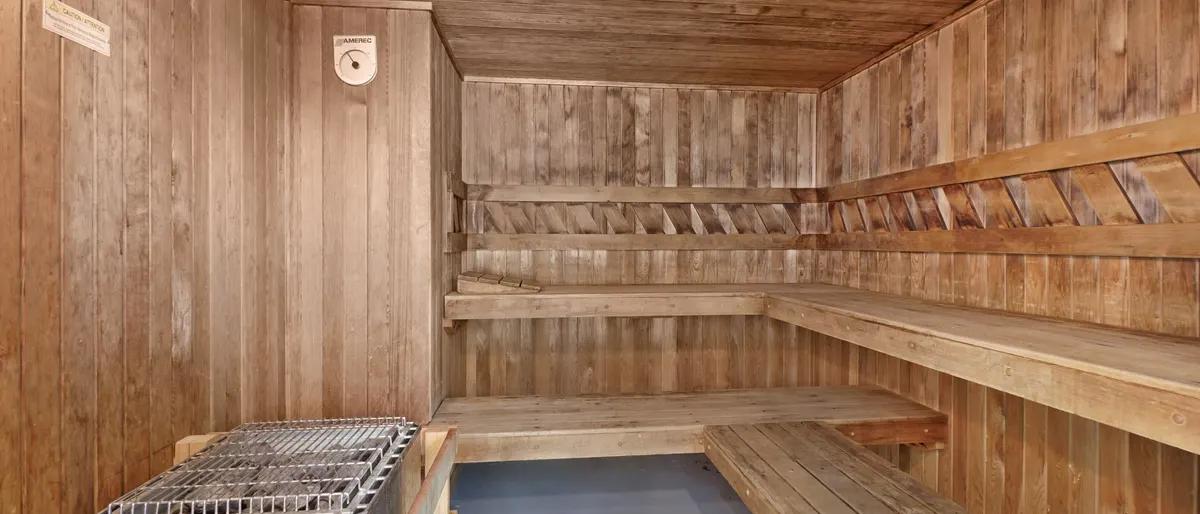
A gay bathhouse is a members-only venue for men that combines spa facilities — sauna, steam room, often a hot tub or pool — with private rooms and social areas, where sexual contact between guests is permitted and expected as part of the culture. Both halves of that are true at once. Some visitors go for the steam room and a nap, some go to meet people, most go for a blend, and nobody at the door asks which one you are.
Bathhouses have been part of gay male life in America for more than a century. Public bathhouses in New York became known meeting places for men in the early 1900s, and by the 1960s and 70s dedicated gay bathhouses operated in every major city — at its peak the Club Baths chain alone ran more than 40 locations nationwide. The AIDS crisis ended that era abruptly, and what exists today is a smaller, more openly run version of the tradition: wellness framing on the marketing, free on-site HIV and STI testing at many venues, and far less stigma than a generation ago.
Gay bathhouses are legal — here's why people ask
Gay bathhouses are legal in every US state, and the ones operating today are licensed businesses, regulated the way any spa, gym, or private club is — at city and county level, not by any federal rule.
The question comes up because of the 1980s. Several cities used local public-health orders to close bathhouses during the AIDS crisis, and those were the closest thing to a ban that ever existed. San Francisco's stood the longest, from 1984 until it was lifted in 2020, and New York adopted a state health regulation in 1985 that shuttered most of its venues. Both were health-code orders rather than criminal law, and both have since eased.
What varies today is licensing and zoning, not legality — which is why one metro can have four bathhouses and the state next door none.
Bathhouse vs. spa vs. sauna
Mostly the words are regional, not different things. "Bathhouse" is the standard American term. "Sauna" is what the same venue is called across Europe, the UK, and Australia — a London sauna and a Chicago bathhouse are the same category of business. "Men's spa," "health club," and "men's club" are names American venues use on signage and licensing, which is why places called Eros Men's Spa or Tampa Men's Club are bathhouses in every practical sense.
Two distinctions do matter:
- A gay bathhouse is not a Korean or Russian bathhouse. Jjimjilbangs and banyas are family wellness facilities where sexual activity is prohibited and enforcement is real. Different business, different rules.
- A bathhouse is not a sex club. Sex clubs are typically event-based, may have no wet facilities, and often run themed nights with dress codes. Bathhouses keep long or around-the-clock hours and are built around the spa amenities. Some venues straddle both, and our guide to bathhouses across the US sorts them out city by city.
Your first visit, step by step
Here's the whole sequence, so nothing surprises you.
1. Check in at the front desk. You'll show a valid photo ID. Nearly all venues are members-only, so first-timers fill out a short membership form — a two-minute formality that exists for legal and privacy reasons. You pay for a locker or a private room at the same time, and cash and cards are both usually fine.
2. Choose a locker or a room. A locker gets you somewhere to put your clothes and full run of the facility. A private room gets you a lockable door and a bed. Most first-timers take a locker — though a room gives you a door you can close when you want out of the social flow, which some find steadying.
3. Get your key and towel — the towel is the outfit. The thing nobody says out loud: you undress completely and wear the towel, usually around the waist, and that's the dress code. Everyone is dressed identically, which is a bigger relief than first-timers expect. The key comes on an elastic band for your wrist or ankle, the only other thing you'll be carrying. Flip-flops are worth bringing; some venues sell them at the desk. A minority of venues run themed or gear nights with their own dress code, always announced ahead of time.
4. Change, and leave your phone in the locker. This isn't a suggestion — photography and phone use are banned in essentially every bathhouse in the country, and it's the rule staff enforce most aggressively.
5. Walk the whole place once. Most bathhouses share a blueprint: locker area, wet area (steam room, sauna, sometimes a pool), a dry lounge, a corridor of private rooms, often a gym or outdoor deck. Larger venues — Steamworks Chicago spans four floors — take longer to map. Do a lap before you settle; it kills the disorientation, and wandering is normal behavior in itself.
6. Find a spot and let things happen slowly. The steam room and lounge are where people spend the most time and where the pace is easiest. There's no schedule and no obligation to do anything at all.
7. Saying no is a look, not a speech. The part first-timers most want spelled out. Interest is signaled with eye contact and proximity; declining is signaled by not returning either. A head shake, a briefly raised hand, or simply turning away is complete and universally understood. No explanation is expected, and a regular won't take it personally or follow you. If someone doesn't take the hint, tell staff — that's what they're there for.
Pro Tip
Go on a weekday afternoon for your first visit. It's quieter, cheaper at most venues (daytime rates are common), and much easier to get the lay of the place than on a Saturday night when the crowd peaks.
The etiquette nobody tells you
These are the rules regulars follow without ever discussing them out loud.
- Phone stays in the locker. The single hardest rule. Everyone in the building is relying on it.
- No means no the first time. Nobody negotiates, repeats an approach, or asks why. Reading a no and moving on immediately is the core social skill of the room.
- Ask before touching. Proximity and eye contact are the opening move — hands are not.
- An open door means open to company; a closed door means don't knock. Private-room doors are the clearest signaling system in the building, and they're respected absolutely.
- Shower before the wet areas. Basic pool-deck manners, and it's expected.
- Sit on your towel. Every time, on every surface. Nobody will say anything, but everyone notices.
- Don't hover. Lingering outside a room or over someone who hasn't looked back reads as rude at every venue.
- Read the room on talking. Some areas are social — the lounge, the deck, the pool. The corridors mostly aren't.
- Tidy up after yourself. Towels in the bin, room left as you found it.
- Don't out anyone, ever. Not to friends, not online, not by mentioning you saw them. The oldest rule in the building.
Dark rooms, explained
A dark room is an unlit or very dimly lit space inside some bathhouses and gay bars where the low light is the point: it makes contact anonymous, and identities go unrecognized. That's the whole concept. Some venues have one, many don't, and in larger complexes it's typically one clearly separate area rather than something you'd stumble into.
Two practical things worth knowing. First, the same etiquette applies in the dark as everywhere else — consent, and taking a no the first time. Second, you never have to go in. Plenty of longtime regulars never do, and skipping it costs you nothing about the rest of the visit. If you're curious, walking to the doorway, looking, and deciding not to enter is an entirely ordinary thing to do.
Hygiene, health, and safety
Modern bathhouses take this seriously, and the resources are better than people expect. Condoms and lube are stocked free throughout, and many venues partner with local health organizations for free on-site HIV and STI testing on set days — Club Houston and Club Orlando have both run testing programs for years. Staff monitor the premises, and because everyone checked in with ID at the desk, the room is less anonymous from a safety standpoint than it looks.
The practical basics:
- Shower before and after. Before for everyone else, after for you.
- Wear flip-flops. Wet floors, shared surfaces.
- Hydrate. Steam rooms dehydrate you faster than you'd guess, and alcohol makes it worse.
- Know your own testing rhythm. Regular HIV and STI screening is standard practice in this part of the scene, and PrEP information is widely available at these venues. What's right for you is a conversation for your doctor or a local LGBTQ+ health clinic — a guide can't make that call.
- Use ordinary judgment. Don't leave valuables unattended, don't take substances from strangers, trust your read on a person or a situation.
This is general orientation, not medical advice.
What it costs
Entry commonly runs $10 to $45, depending on the city, whether you take a locker or a private room, and the day and hour you show up.
- Lockers: the cheaper option and the standard first-visit choice, often in the $10–20 range.
- Private rooms: roughly double a locker at most venues, more for larger or premium rooms.
- Daytime and weekday rates: most venues discount them, sometimes substantially.
- Membership: a small annual or one-time fee is common, and regulars come out ahead on it quickly.
- Under-25 pricing: a lot of venues run a reduced rate for younger visitors.
Budget the entry fee plus a locker and you've covered the visit — towels are included and there's nothing else you're required to buy.
Reciprocity is worth knowing if you travel: a few operators run several cities and honor membership across them. FLEX has Atlanta, Cleveland, Los Angeles, and Phoenix; The Clubs has Columbus, Dallas, Indianapolis, and St. Louis. Independents like Club Philly and Club Fort Lauderdale run their own membership, so budget that sign-up separately.
Door prices move by day and hour and change without much notice — check the venue's own site or call before you go rather than trusting any published figure, including this one.
Pro Tip
Bring a little cash even though almost every venue takes cards. Some run cash-only lockers, vending, or bar service, and a few of the older independents still prefer it at the door.
Going alone: the first-timer nerves
Yes — and it's the norm, not the exception. The overwhelming majority of people in any bathhouse on any given night came by themselves, and the whole social structure of the place assumes it. Nobody is watching the door to see who walked in with whom.
A few things that help:
- Nobody can tell it's your first time. Everyone wanders, everyone does a lap, everyone stands in a hallway deciding where to go next. Uncertainty is invisible because it's universal.
- Doing nothing is a complete visit. Steam room for an hour, shower, home. Plenty of people do exactly that.
- You can leave whenever you want. No minimum stay, no explanation. If it's not your night, get dressed and go.
- The first fifteen minutes are the hardest part. The nerves drop off sharply after the initial lap, once the layout stops being a mystery.
- Bringing a friend has a trade-off. It's comforting, but a pair reads as unavailable, so you'll get approached less. Fine if that's what you want.
Find the venues near you
Bathhouses, bars, clubs, and events — browse LGBTQ+ nightlife in 100+ cities on Out x Out.
Frequently asked questions about gay bathhouses
What is a bathhouse?
A gay bathhouse is a members-only men's venue combining spa facilities — sauna, steam room, sometimes a pool — with private rooms and lounge areas, where sexual contact between guests is part of the culture. In Europe, the UK, and Australia, the same kind of venue is usually called a sauna. American venues often license themselves as a "men's spa," "health club," or "men's club."
What should I expect at a gay bathhouse on a first visit?
Check in with a photo ID, fill out a short membership form, and pay for a locker or a private room. You'll get a key on an elastic wristband and a towel, change, and leave your phone in the locker. From there you're free to explore — most people do a full lap first, then settle in the steam room or lounge. Nothing is scheduled and nothing is required of you.
Are gay bathhouses legal in the US?
Yes, in every state. Operating venues are licensed businesses regulated at city and county level, not by any federal rule. The question comes up because several cities used local public-health orders to close bathhouses during the 1980s AIDS crisis — San Francisco's stood from 1984 until 2020, and New York adopted a state health regulation in 1985 that shuttered most of its venues. Those were health-code orders rather than criminal bans, and they've since eased. What still varies city to city is licensing and zoning, which is why coverage is so uneven.
What do you wear in a gay bathhouse?
The towel they give you at check-in, usually around the waist, and nothing else. You undress completely at your locker or room and leave your clothes there. Flip-flops are the one item worth bringing yourself. Some venues host occasional themed or gear nights with a specific dress code, and those are announced in advance.
What is the etiquette in a gay bathhouse?
Phone stays in the locker; ask before touching; take a "no" the first time without asking why; an open room door means open to company and a closed one means don't knock; shower before the wet areas; sit on your towel; don't hover; and never out anyone you saw there. Declining someone is done with a head shake or by turning away — no explanation is expected.
What is a dark room?
An unlit or very dimly lit area found in some bathhouses and gay bars, where the darkness makes encounters anonymous. Not every venue has one, it's a clearly separate space rather than something you wander into, and you're never obliged to go in. The same consent rules apply there as everywhere else.
How much does a gay bathhouse cost?
Commonly $10 to $45 for entry. A locker is the cheaper option and a private room usually runs about double, with discounted daytime and weekday rates at most venues plus reduced under-25 pricing in a lot of places. Expect a small membership fee on your first visit. Rates change often, so confirm with the venue directly.
Is it weird to go to a bathhouse alone?
No — most people there came alone. The entire social setup assumes solo visitors, and nobody notices who arrived with whom. Going with a friend is fine too, though pairs tend to get approached less because they read as unavailable.
What do I need to bring?
A valid photo ID and your entry fee. Everything else is provided or optional: towels are included, condoms and lube are free throughout the venue, and flip-flops are the one thing worth packing. Anything valuable stays in the locker.
Are gay bathhouses safe?
Generally, yes. Everyone in the building checked in with ID, staff monitor the premises, and safer-sex supplies are free throughout. Beyond that it's the judgment you'd use anywhere: don't leave valuables out, don't take substances from strangers, trust your instincts. Staff will step in if someone isn't respecting a no.
Do bathhouses offer HIV and STI testing?
Many do. Venues frequently partner with local health organizations to run free on-site HIV and STI testing on set days, alongside free safer-sex supplies and PrEP information. Which days, and whether a given location offers it at all, varies — check that venue's site or ask at the front desk.
Are there gay bathhouses in every city?
No. Most major US metros have at least one and many mid-sized cities do, but coverage is uneven — Florida, California, Texas, and the Pacific Northwest are well served, while much of the Mountain West and Deep South has few options. Out x Out lists 45 bathhouse and sauna venues across 32 US cities, plus venues in Canada, Mexico, and Europe.
More guides
- Best Gay Bathhouses in the US — the city-by-city rundown of where to actually go.
- The Best Gay Bars in Chicago — the city with the country's best-known bathhouse, and the neighborhood around it.
- Browse LGBTQ+ venues by city — bathhouses, bars, clubs, and more, updated continuously.
Enjoyed this article?
Subscribe to our newsletter for more LGBTQ+ travel guides, local discoveries, and community stories delivered to your inbox.
Subscribe to Newsletter
Robbie S.
I'm Robbie, the founder of Out x Out. I'm from Minneapolis, though I'm spending 2026 building this community from the road — somewhere between South America and Asia. The idea for Out x Out came from a trip to Berlin, where the gay nightlife calendar was years ahead of ours: you could see not just where to go out, but which night to go — so naturally I wanted that kind of insider info for every city in the US (and beyond... eventually). I'm more of a behind-the-scenes type, but the whole point of this is connection: I'd take one real one over a hundred surface-level ones, and I'm trying to build that for the community, city by city.
Related Posts

Your First Drag Show: What to Wear, How Much Cash to Bring, and Tipping Etiquette
The practical first-timer's guide to drag: what people actually wear, how much cash to bring, how to hand a tip to a queen without making it weird, and what the room expects of you.

First Time at a Gay Bar: What to Expect (and Why You Should Go)
A gay bar is a bar. Here's what actually happens on a normal night, why walking in alone is easier than you think, and how to pick the right one for your first time.

What Is a Drag Queen? History, the Craft, and Every Question You've Wondered About
Drag is an art form, not an identity, and what people assume about it is off. Here's what a drag queen actually is, where drag came from, what the job pays, and how the illusion gets built.