
Gay New York City
The birthplace of Pride and the world's largest gay scene
Ranked #1 gayest city in the United States
Why New York City Scores 92/100
New York City earns the #1 spot among US cities for its gay scene — and it's not particularly close. No other American city can match NYC's combination of scale, history, and institutional depth. The city that launched the modern LGBTQ+ rights movement at the Stonewall Inn in 1969 still leads in virtually every category that matters. What keeps NYC from a perfect score is the brutal cost of living and a social culture that, while inclusive, is not exactly warm.
Where NYC dominates: Nightlife is a perfect 10 with nearly 70 dedicated gay bars spread across at least five distinct neighborhoods — Hell's Kitchen, the West Village, Chelsea, Williamsburg, and Harlem each have their own thriving scenes. The events calendar is unmatched: NYC Pride draws over 1 million spectators with 75,000+ marchers, the Village Halloween Parade adds another 2 million, and events like Broadway Bares, Bushwig, and Folsom Street East fill the calendar year-round. Community infrastructure is elite — The Center in the West Village, Callen-Lorde Health Center, the Ali Forney Center, the Leslie-Lohman Museum (the world's only dedicated LGBTQ+ art museum), and 38 LGBTQ+ sports leagues make NYC the most institutionally supported queer city on the planet.
Where NYC loses points: The cost of living is punishing. A 1BR near Hell's Kitchen or Chelsea runs $4,200-$6,000/month — three to four times what you'd pay near Boystown in Chicago. Condos in gay neighborhoods start at $1 million. The social scene, while massive, has that classic New York edge — people are busy, direct, and not going to invite you to brunch after one meeting. These are real trade-offs, but they're the price of admission to the deepest, most diverse, and most historically significant gay scene in America.
New York City has the largest and most diverse gay nightlife scene in the United States — and arguably the world. With nearly 70 dedicated gay bars and clubs spread across at least five distinct neighborhoods, the variety is unmatched. Hell's Kitchen is the current epicenter, packing the densest cluster of gay bars in Manhattan along 9th and 10th Avenues — Industry Bar, Flaming Saddles (where bartenders dance on the bar), Atlas Social Club, Hardware, VERS, and HUSH HK are all within walking distance. The neighborhood is vibrant seven nights a week, with something for every taste from upscale lounges to raucous dance bars.
The West Village is where it all started. The Stonewall Inn — a National Historic Landmark and the birthplace of the modern LGBTQ+ rights movement — still operates as a bar and community gathering place. Pieces hosts legendary drag shows and underwear parties, The Monster offers cabaret upstairs and a packed dance floor downstairs, and The Duplex has been serving queer cabaret since 1951. Chelsea remains a stronghold with Eagle NYC (leather/fetish) and G Lounge Chelsea. NYC is also one of the few US cities with multiple dedicated lesbian bars — Henrietta Hudson is a West Village institution, Cubbyhole is the beloved tiny bar with Christmas lights year-round, and Ginger's Bar holds it down in Brooklyn. Across the river, Brooklyn brings a grittier, more alternative scene — 3 Dollar Bill in Williamsburg is a massive queer venue with live performances, and House of Yes in Bushwick is a boundary-pushing performance space and nightclub. NYC is one of the few cities where you could visit a different gay bar every night for six weeks and never repeat.
New York City is the undisputed capital of American drag. The city has produced more RuPaul's Drag Race winners than any other — Bob the Drag Queen (Season 8), Sasha Velour (Season 9, the iconic rose petal reveal), Aquaria (Season 10), and Bianca Del Rio (Season 6) all call NYC home, alongside legends like Peppermint, Kandy Muse, and Vivacious. RuPaul himself built his early career at NYC's Pyramid Club. Drag shows happen every single night across dozens of venues — this is not a weekend-only scene.
For dedicated drag dining, LIPS NYC has been the city's "#1 drag show" for 30 years with nightly performances and a famous Sunday Gospel Brunch. Lucky Cheng's — one of NYC's longest-running drag restaurants (since 1993) — won LUXLife Magazine's 2025 Best Drag Brunch Venue award with its Divalicious Brunch Buffet and bottomless mimosas. Diva Royale runs a premier dinner-and-show experience. For drag brunch, VERS, Rise Bar, Kween (Queens), and Good Judy all serve up weekend performances with food and cocktails. Beyond the bar scene, Bushwig — Brooklyn's annual drag festival featuring 200+ performers — is one of the largest drag festivals on the East Coast. The sheer volume, caliber, and historical significance of NYC's drag scene earns it a perfect 10.
NYC's LGBTQ+ event calendar is the deepest in the country — and it's not even close. The NYC Pride March (last Sunday of June) is the largest LGBTQ+ Pride event in North America, drawing over 1 million spectators and 75,000+ marchers across 60 floats. The march traces a route through some of the city's most historic queer spaces, ending near the Stonewall Inn. This was the original Pride march, first held in 1970 to commemorate the one-year anniversary of the Stonewall uprising — every other city's Pride exists because NYC did it first.
Beyond Pride, the calendar is packed year-round. The Village Halloween Parade draws over 2 million spectators and 50,000+ participants and has long been a beloved showcase for queer creativity and costume. Broadway Bares features 150 Broadway dancers in a striptease variety show benefiting Broadway Cares/Equity Fights AIDS. Folsom Street East brings kink and leather culture to Chelsea. Bushwig packs 200+ drag performers into a Brooklyn festival. Harlem Pride has grown to 20,000+ attendees celebrating Black LGBTQ+ culture. NewFest — the city's LGBTQ+ film festival — screens 130+ queer films in its 37th edition. Add Urban Bear Weekend, circuit parties, and weekly recurring events at nearly 70 venues, and NYC has more LGBTQ+ programming in a single month than most cities have in a year.
Strong daytime scene in warmer months — rooftop bars, brunch culture, and outdoor events are a way of life from May through October. The West Village and Hell's Kitchen both have vibrant sidewalk cafe culture that's visibly queer. Brooklyn offers day parties and outdoor markets. Winter narrows the options but indoor brunch and cultural programming (museums, theater, film) keep the daytime scene alive year-round. The 8 reflects that NYC's density and cultural depth make the daytime scene strong even when the weather doesn't cooperate.
Safety & Legal
New York has comprehensive LGBTQ+ protections at both the state and city level — anti-discrimination laws covering employment, housing, credit, and public accommodations based on sexual orientation, gender identity, and gender expression. Conversion therapy on minors is banned. Same-sex marriage was legalized in New York in 2011 — four years before the Supreme Court's nationwide ruling. In 2025, the NYC City Council approved multiple bills expanding protections for gender-affirming care, and Mayor Adams announced a $2 million emergency fund specifically for transgender and gender-nonconforming New Yorkers. NYC also has safe haven ordinances protecting anyone receiving gender-affirming care, even if they're from a state where it's been banned.
Safety gets an 8 because NYC is a city of 8.3 million people — incidents happen. Hate crimes are reported and prosecuted, but the sheer size means you need standard big-city awareness, especially late at night. That said, Hell's Kitchen, the West Village, and Chelsea are among the safest and most visibly queer neighborhoods in America — you will see rainbow flags on every block, same-sex couples holding hands is unremarkable, and the NYPD has a dedicated LGBTQ+ liaison unit. The city actively promotes itself as a queer travel destination. The 8 is honest about urban reality while recognizing that NYC's gay neighborhoods are among the most welcoming places in the country.
Community
NYC's community infrastructure is unmatched. The Center (The Lesbian, Gay, Bisexual & Transgender Community Center) in the West Village is one of the most prominent LGBTQ+ community centers in the world — offering health services, support groups, cultural events, and community programming that touches tens of thousands of lives annually. Callen-Lorde Community Health Center provides comprehensive LGBTQIA+ healthcare at three locations across Chelsea, Brooklyn, and the Bronx, including trans care, behavioral health, and HIV services. The Ali Forney Center is the nation's largest organization dedicated to LGBTQ+ homeless youth, providing emergency housing and transitional support.
The Brooklyn Community Pride Center (BCPC) serves as the primary LGBTQ+ resource provider for Brooklyn from its Crown Heights location. Apicha Community Health Center focuses on AAPI and LGBTQ+ communities. The NYC Unity Project coordinates city government LGBTQ+ health and services across all five boroughs. All 18 eligible NYC Health + Hospitals facilities earned the HRC's "LGBTQ+ Healthcare Equality Leader" designation in 2024. An estimated 706,000 LGBTQ+ adults live in the NYC metropolitan area — the largest concentration in the country — with 8.2% of New York State adults identifying as LGBO and one in five adults aged 18-24 identifying as LGBO.
NYC has 38 LGBTQ+ sports leagues — more than any other city in the US by a wide margin. The Big Apple Softball League (BASL) has been running since 1977 with Saturday/Sunday double-headers. Big Apple Recreational Sports (BARS) is a co-ed multi-sport league. Gotham Knights Rugby fields competitive teams in spring and fall seasons. Team New York Aquatics (TNYA) is the largest LGBTQ+ aquatics team in the world — offering swimming, water polo, diving, and artistic swimming. Front Runners New York covers running, cross-country, track, and triathlons. Queer Flips offers LGBTQ+ gymnastics. Boxers NYC runs bar-based sports leagues including dodgeball. The NYC LGBT Sports Network coordinates all leagues across the tri-state area. No other city comes close to this depth.
NYC is home to the Leslie-Lohman Museum of Art in SoHo — the world's only dedicated LGBTQ+ art museum, housing over 22,000 objects including paintings, drawings, photography, and sculpture with year-round exhibitions. The museum also runs a residency for queer theater and performance artists. NewFest — NYC's LGBTQ+ film festival — is in its 37th year, screening 130+ queer films across Brooklyn and Manhattan venues, plus running NewFest Pride (May-June) and the Queering the Canon retrospective series. The Duplex in the West Village has been a landmark for queer cabaret since 1951. House of Yes in Bushwick pushes boundaries with queer performance art, burlesque, and immersive experiences. No other US city has a dedicated LGBTQ+ art museum — that alone justifies the 10.
Social & Dating
NYC is the single largest market for Grindr, Scruff, Hinge, and every other dating app. The sheer density of users means the grid refreshes constantly — you will literally never run out of profiles, and the diversity of the dating pool is unmatched. Beyond apps, the nearly 70 gay bars and 38 sports leagues provide endless opportunities to meet people organically. Hell's Kitchen bar-hopping on a Friday night is a social institution. Brooklyn's queer scene offers more alternative, community-oriented spaces where connections form around shared creative interests. The dating pool is enormous, diverse, and heavily singles-oriented — NYC has one of the highest percentages of single adults among major US cities. The 9 (not 10) accounts for the fact that the paradox of choice is real — with so many options, some people find it harder to commit.
This is where NYC's reputation precedes it — and it's earned. New Yorkers are direct, busy, and not going to invite you to brunch after meeting you once at a bar. Making deep friendships takes genuine effort, especially for newcomers. The flip side is that the LGBTQ+ community is so large that there are niche groups for every conceivable interest — The Center offers dozens of social and volunteer groups, sports leagues create tight-knit communities, and neighborhood bars develop their own regulars. The 7 (vs. Chicago's 8) reflects honest Midwest-vs-East-Coast differences in social warmth. NYC will embrace you, but it won't hold your hand.
Travel & Cost
NYC has the best public transit system in the US — the subway runs 24 hours a day, 7 days a week, and directly serves every major gay neighborhood. Hell's Kitchen is served by the A/C/E at 42nd St and 50th St stations. The West Village has the 1 train at Christopher St and A/C/E/B/D/F/M at West 4th. Chelsea has C/E at 23rd St and the 1 at 18th. You can get from Hell's Kitchen to the West Village in 15 minutes, or walk between Hell's Kitchen and Chelsea in the same time. Brooklyn's queer hubs (Williamsburg, Bushwick) are a quick L or M train ride. Drivability gets a 3 because driving in Manhattan is genuinely terrible — parking is scarce and expensive ($30-50/hr in garages), traffic is brutal, and congestion pricing now adds tolls for entering Midtown. Three airports (JFK, LaGuardia, Newark) provide access from anywhere in the world.
Three major airports make NYC accessible from virtually anywhere — JFK is a major international hub, LaGuardia handles domestic routes, and Newark adds capacity from New Jersey. Flights are competitive from most US cities. The trade-off is cost: NYC is the most expensive city to visit in the US. Hotels near gay neighborhoods average $250-400/night (Hell's Kitchen averages $258, Chelsea and West Village run higher). Drinks are expensive — beer $8-12, cocktails $15-20, club cover $10-50. Brooklyn venues are 30-50% cheaper than Manhattan. The best value is visiting during Pride (June) or in October when the NewFest film festival and Village Halloween Parade overlap. Happy hours (typically 4-7 PM) offer significant savings at $5-8 cocktails.
Living
This is where NYC pays the price for being #1 in everything else. A 1BR apartment near Hell's Kitchen runs $4,200-4,900/month. Chelsea averages around $6,000/month. The West Village — a landmark district with limited new construction — pushes $5,000-6,500 for a 1BR. Even Brooklyn's Williamsburg runs $3,500-4,500. These are three to four times what you'd pay near Boystown in Chicago. Buying is even more daunting: a 1BR condo in Hell's Kitchen has a median price of $1,025,000. Chelsea's median hits $1,895,000. A 3BR house anywhere within reasonable distance of Manhattan is $800K-1.5M minimum. Dining is excellent but expensive — dinner for two in a gay neighborhood runs $80-120 before drinks, though the variety means you can find good meals at every price point. New York State plus NYC income tax adds 6-10%+ on top of federal. The living scores are the lowest of any top-10 city — that's the honest trade-off for having access to the deepest gay scene in America.
Frequently Asked Questions About Gay New York City
Explore More Cities
View All Rankings
Key West
America's Original Gay Paradise — Gay Bars on Duval, Year-Round Sun, Zero Pretense

Orlando
Theme Park Magic Meets Gay Nightlife — Where Gay Days Changed Everything

San Francisco
The city that started it all — 40+ gay bars, the Castro, Folsom, and a scene that never stopped fighting

Chicago
World-class gay scene with what's widely cited as America's first officially recognized gayborhood

Los Angeles
The entertainment capital meets America's gayborhood city — WeHo is a whole municipality built around queer life

Provincetown
America's Gayest Town — Where the Entire Community Is the Gayborhood
Free on iOS & Android
Do More with the App
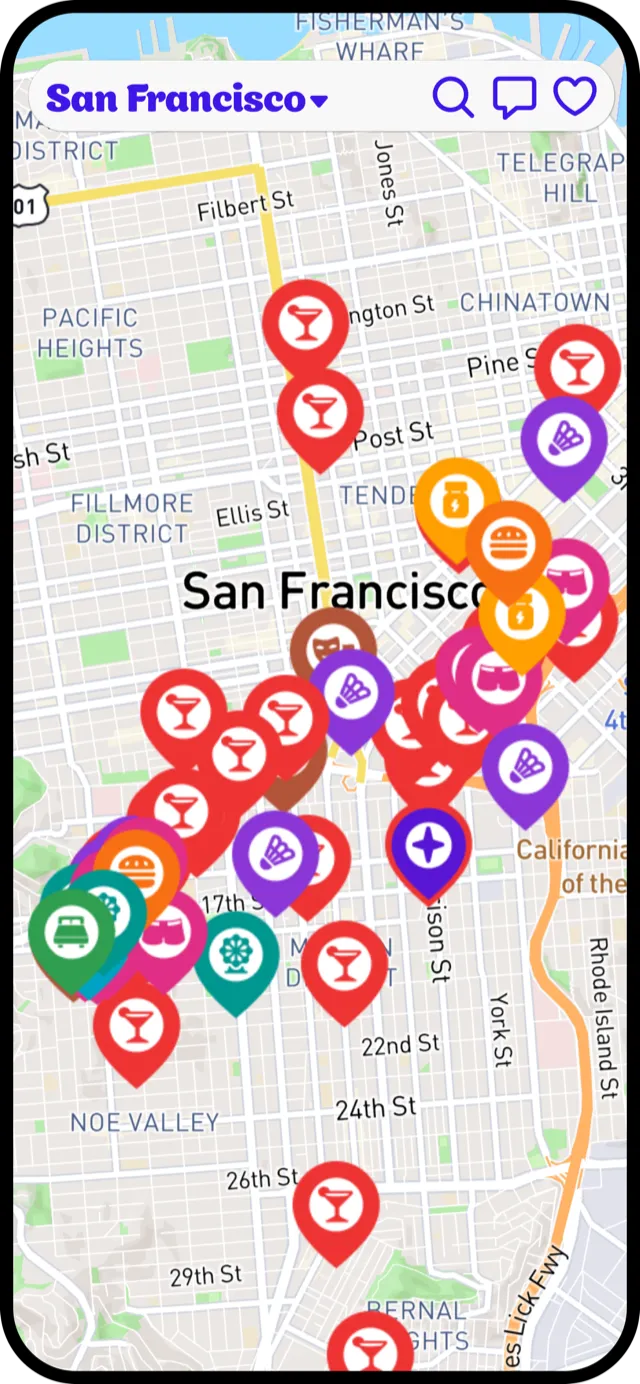
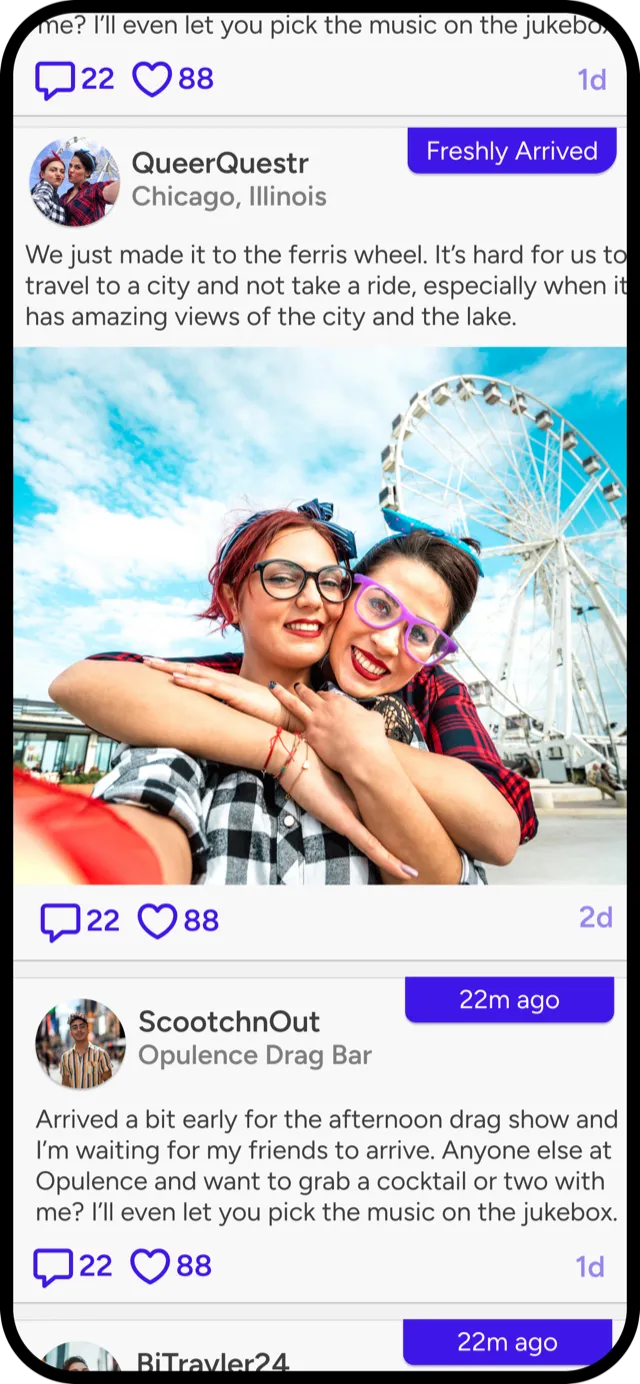
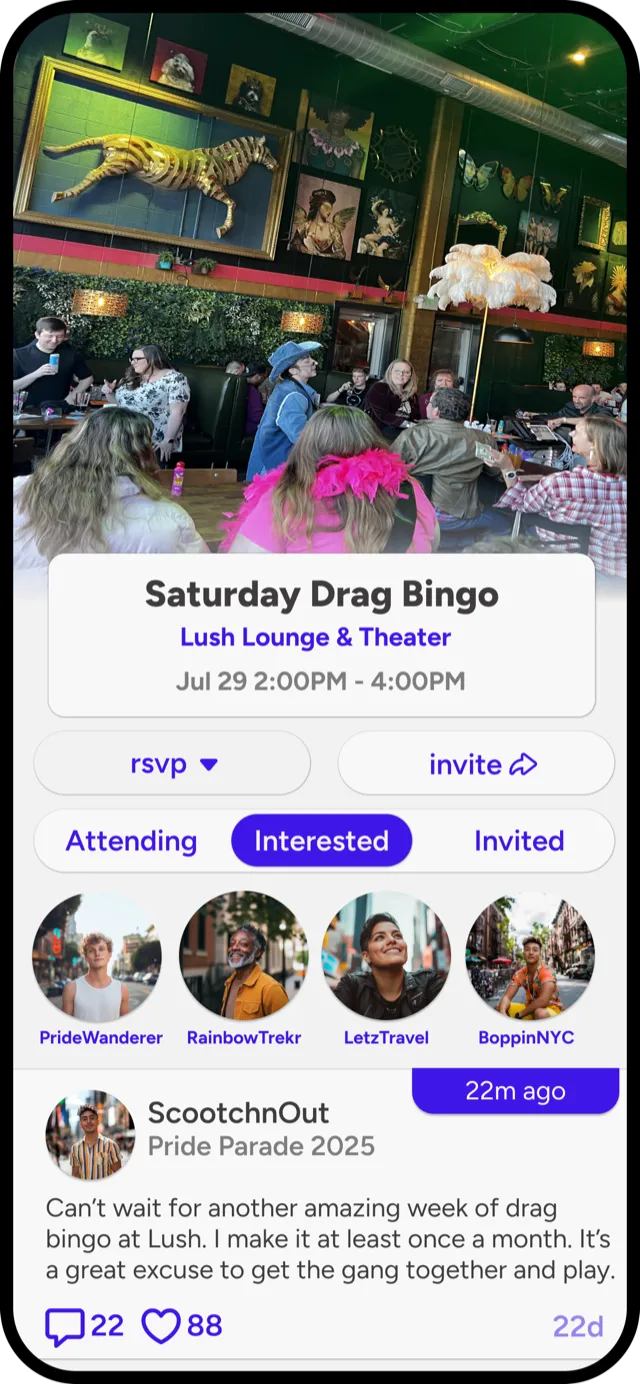
The full Out x Out experience — built for queer nightlife lovers and travelers.
Get the Gay New York City Guide
Events, venues, and city guides delivered weekly.
No spam, unsubscribe anytime.